Anjouan Casino Licence in the UK: What It Means
 Available in GB
Anjouan licensing may identify an operator’s claimed authority, but it does not place the casino within the UK regulatory system.
Table of Contents
- What an Anjouan Licence Does—and Doesn’t—Mean for UK Players
- How Anjouan Licensing Works, and What Its Framework Leaves Out
- The Player Protections You May Not Have
- Bonuses, Payment Terms and the Wait to Get Your Money
- An Anjouan Licence Is Not Permission to Serve Great Britain
- What to Check Before You Trust an Anjouan Casino Site
- New Anjouan Casinos: Why Verification Matters More Than the Launch
- Crypto at Anjouan Casinos: Payment Convenience Has Limits
- How to Read Anjouan Casino Reviews with Your Eyes Open
- Offshore Licensing: Anjouan Among Other Jurisdictions
What an Anjouan Licence Does—and Doesn’t—Mean for UK Players
An Anjouan casino licence can sound like a clear answer: a regulator is named, a licence is displayed, and the site looks official. I used to treat that sort of badge as shorthand for “someone has checked this, so I’m covered”. It isn’t that simple. The key distinction is between a casino’s claimed authority to operate and the legal position of a person who visits it from the UK.
A non-UK-regulated casino is an online gambling site that operates without oversight from the UK Gambling Commission (UKGC). It may describe itself as licensed in another jurisdiction, including Anjouan. That description tells you what the operator says about its licensing arrangement; it does not, by itself, make the site part of the UK’s regulatory system or answer every question about whether it may serve customers here.
That matters because a licence and a player’s legal position are not the same thing. The Gambling Act 2005 is directed at operators supplying gambling services into the UK market, rather than at individual players. In other words, the law’s focus is on the business providing the service, not on prosecuting someone simply for placing a bet on a site that lacks UKGC oversight.
If you’re considering an Anjouan-licensed casino in the UK, check the available details carefully before choosing. This list offers a brief reference point on payout speed.
Payout speed: 1-3 business days Jetsetspins lists a payout speed of 1–3 business days, giving you a stated timeframe to consider.
Payout speed: 1-3 business days x3bet lists a payout speed of 1–3 business days, a useful detail for you to weigh.
Payout speed: 1-3 business days Revery Play lists a payout speed of 1–3 business days, so you have a stated timeframe to factor into your decision.
Payout speed: 1-3 business days Zombillion lists a payout speed of 1–3 business days. You can use this as one point of reference when assessing the operator.
Payout speed: 1-3 business days NightLuck lists a payout speed of 1–3 business days, providing you with a stated payout timeframe.
Payout speed: 1-3 business days Amunbet lists a payout speed of 1–3 business days. This gives you a concrete detail to consider.
Payout speed: 1-3 business days WinBeast lists a payout speed of 1–3 business days, which you can take into account when reviewing your options.
Payout speed: 1-3 business days Chanze lists a payout speed of 1–3 business days, offering you a stated timeframe for payouts.
Payout speed: 1-3 business days EvoSpin lists a payout speed of 1–3 business days. You can treat this as a reference point when considering it.
Payout speed: 1-3 business days NightWin lists a payout speed of 1–3 business days, a stated detail for you to consider.
There is also no explicit prohibition in UK law on British citizens using gambling services licensed in other countries. A person who gambles on an unlicensed site does not, on that basis, commit a criminal offence under UK law. That is a narrow point about the player’s liability. It should not be stretched into the broader claim that every foreign-licensed casino is authorised to operate in Britain, or that using one carries no practical or legal uncertainty.
I find that distinction easy to lose in the wording sites use. “Licensed” can sound like a universal stamp of approval. In reality, a licence belongs to a particular regulatory setting. A casino may have a licence from a jurisdiction outside the UK while remaining outside UKGC oversight. The existence of that licence does not turn it into a UK-licensed casino, and it does not transfer UK protections or procedures to the player.
Two different questions
When you encounter an Anjouan casino, keep two questions separate:
- What does the operator’s licence claim say about its status in the jurisdiction that issued it?
- What rules apply to an operator offering gambling to customers in Great Britain?
The first concerns the operator’s arrangement with a regulator outside the UK. The second concerns the UK market. Mixing them up is how a foreign licence starts to look like permission from the UK, even though those are different things.
The Gambling Act 2005 places responsibility on operators supplying gambling services into the UK market. That does not mean a player becomes the operator’s regulator, or that the player commits an offence by using a site without a UKGC licence. It does mean you should not read the absence of player criminal liability as evidence that the operator is meeting UK requirements.
That’s the awkward middle ground: the law does not explicitly criminalise the British player for using a gambling service licensed abroad, but the service is still not under UKGC oversight. “You can use it” and “it is regulated here” are not interchangeable statements. One is about the player’s position; the other is about the operator and the market it serves.
The same distinction applies if a site describes itself as an online casino licensed in Anjouan. The phrase may identify the regulator the operator says it answers to, but it does not establish that the UKGC supervises the casino. Nor does the player’s lack of criminal liability settle whether the operator is entitled to target British customers. Those are separate questions, and the licence label alone cannot answer both.
I would also be wary of treating a calm legal summary as a personal recommendation. Knowing that players are not the target of the Gambling Act 2005 is not the same as knowing what will happen if an account is closed, a payment is delayed, or a dispute arises. Those are practical risks, not proof that the player has committed a crime. The legal point can be reassuring in one narrow sense while leaving other uncertainties untouched.
Attention: An Anjouan licence does not transfer UK protections or procedures to the player, nor does it make the casino a UK-licensed entity.
So, when you see “Anjouan casino licence UK 2026” in a site description or advert, read it as a claim about the operator’s licensing, not as a statement that the casino holds a UK licence. And don’t confuse the operator’s obligations with your own legal position: UK law targets businesses supplying gambling into the market, while a player does not commit a criminal offence simply by gambling on an unlicensed site. The distinction is real. It just doesn’t make the two regulatory systems equivalent.
How Anjouan Licensing Works, and What Its Framework Leaves Out
A licence badge can look like a neat answer: the casino has a licence, so somebody must be checking the games, the accounts and the way complaints are handled. I used to read it that way. The important detail is what the Anjouan framework actually requires, not what the word “licensed” seems to promise.
For Anjouan-licensed casinos, the framework does not mandate independent testing of the random number generator, or RNG, that determines game outcomes. Nor does it require audits or the segregation of player funds. Those are specific omissions, not proof that every operator skips testing, keeps poor records or mixes customer money with its own. A casino may choose to do more than the framework requires. But the licence alone does not establish that it has done so.
That distinction is easy to miss. “Tested” can mean a meaningful independent check, or it can be a broad claim on a website. “Audited” may sound like a routine safeguard, but the Anjouan framework does not make audits a requirement. If a casino makes either claim, the useful question is what evidence sits behind it: who carried out the work, what was examined, and whether the information is specific enough to assess. A logo or a sentence in the footer is not the same thing as a clear account of the check.
What the framework does not require
RNG testing matters because it concerns the mechanism generating game results. Without a mandatory testing requirement, an Anjouan casino’s licence does not by itself confirm that an independent organisation has examined that mechanism. That is a narrow point: it does not tell you that a particular game is unfair. It tells you what you cannot infer from the licence.
The same care applies to audits. The absence of a framework requirement does not prove that an operator has no financial records or never commissions outside work. It means an audit is not something the licensing framework guarantees across its licensees. If an operator says it has been audited, treat that as a separate claim to verify rather than a standard feature of every Anjouan licence.
Segregation of player funds is another area where the label can be misleading. The framework does not require casinos to keep player balances separate from operating funds. So a licence is not evidence of that separation. I find this is where vague reassurance does the most damage: “your funds are safe” sounds concrete, but it does not tell you how the money is held or what happens if the company fails.
The Anjouan framework does not mandate independent RNG testing, financial audits, or the segregation of player funds.
None of these omissions proves misconduct. They define the gap between having a licence and having a particular safeguard guaranteed by the licensing rules. That’s the bit worth remembering.
Complaints: a response is not a ruling
The framework does set out a requirement for operators to respond to complaints within 30 calendar days. That gives a player a stated response period to point to when contacting the casino. It does not mean the Anjouan authority will take over the case if the reply is unsatisfactory.
The authority does not handle, mediate or adjudicate player complaints. In plain terms, it is not the body that hears both sides and decides who is right in an individual dispute. An operator’s duty to answer and an authority’s role in resolving a complaint are different things. The first exists under the framework; the second does not.
That difference matters if you are trying to understand what a licence can do for you after something goes wrong. A complaint email may get an answer, but the framework does not provide an authority-led decision on the merits of your case. Nor should the licensing badge be read as a promise that the regulator will step in and secure a particular outcome.
I would separate three questions before trusting any description of an Anjouan casino: what does the framework require, what does the operator claim to do voluntarily, and what can you verify about that claim? They are not interchangeable. “Licensed” answers only the first question in broad terms; it does not fill in every detail of testing, auditing or fund handling.

The same goes for complaint language. “We take complaints seriously” describes the operator’s posture, not an independent review process. A stated response obligation is useful information, but it is not the same as mediation or adjudication by the authority. Keep the distinction visible.
For me, the practical reading is restrained: an Anjouan casino licence identifies a licensing framework, but that framework leaves several checks unmandated and does not give the authority a role in deciding player disputes. It is worth looking beyond the badge and reading each claim for what it actually says. Not what it hints at.
The Player Protections You May Not Have
The first thing I’d check before putting money into an Anjouan casino is not the welcome banner. It’s what happens if I need to stop, set a boundary or challenge the way my account has been handled. Those protections are easy to overlook while everything is working. They matter rather more when it isn’t.
A casino outside the UK Gambling Commission’s system does not give you the same package of safeguards as a UK-licensed site. Non-UK-regulated casinos may have less stringent rules for responsible gambling and data protection. That does not mean every site behaves identically, but it does mean you shouldn’t assume that a familiar-looking control carries the same obligations behind it.
GamStop is not a universal block
GamStop is the UK Gambling Commission’s self-exclusion scheme. Casinos not on GamStop are outside that scheme, so registering with GamStop does not include them. Anjouan-licensed casinos are not required to connect to it.
Critical Risk
Anjouan-licensed casinos are not required to connect to GamStop, meaning self-exclusion through the UK scheme does not block access to these sites.
That distinction can be easy to miss. A site can be accessible to you even if you have chosen to exclude yourself from UK-licensed gambling. If you are using self-exclusion because gambling has become difficult to control, an Anjouan casino is not a workaround that preserves the same protection. It may simply leave you with fewer barriers between you and another deposit.
I used to think a “responsible play” link meant a site had the important safeguards covered. It doesn’t tell you that. Look for the actual tools and their terms before opening an account: whether you can set a deposit limit, restrict access or request self-exclusion, and how the site says those choices are handled. Do not treat an advertised tool as equivalent to a UK-wide scheme.
The important point is not that every Anjouan site lacks every tool. It is that you cannot rely on UK-mandated responsible-gambling protections being available. A non-UK-regulated casino may offer controls of its own, but their presence, scope and practical effect need to be checked on that site. “Responsible” is a label. The terms are what count.
Your data deserves the same scrutiny
Creating an account means handing over personal information. The exact details a site asks for depend on its own process, but the broader concern is straightforward: non-UK-regulated casinos may be subject to less stringent data-protection rules than UKGC-licensed operators.
Before sharing information, read the site’s privacy policy and account terms. Check who says they control the information, what they say it is used for, and how to contact them about it. If those explanations are hard to find, vague or inconsistent across the site, take that seriously. A polished interface is not evidence of strong data handling.

I wouldn’t assume that an operator’s privacy statement gives you the same practical protection or route to help that you would expect from a UK-regulated business. Nor would I send information casually just because a page says it is needed. Consider what you are being asked to provide, whether the request is explained, and whether you are comfortable proceeding.
There is a difference between a site having a policy and you having an effective way to resolve a problem with your data. The policy may describe the operator’s position; it does not, by itself, establish that UK protections apply in the same way.
Fewer familiar routes when something goes wrong
If you play at an offshore casino, you forfeit access to the UK’s Financial Ombudsman Service and the mandatory responsible-gambling tools that apply to UK-licensed operators. That matters when the dispute is not simply about a game, but about how your account or a request for help has been handled.
Anjouan-licensed casinos are also not required to provide an independent alternative dispute-resolution process comparable to the services used by UKGC-licensed operators. So before you deposit, find out what the operator says you should do if you have a complaint. Save the relevant terms and any messages. That is basic record-keeping, not a substitute for an independent body.
I’m wary of the phrase “customer support” when it is used as if it answers every question. Support may be the operator’s own team; that is not the same thing as an independent service reviewing a complaint. And if the operator’s response does not resolve the issue, the UK routes you might be used to are not automatically available.
- Read the site’s privacy policy and account terms
- Save relevant terms and all messages
- Check for clear policies and stated processes
- Assume UK protections apply to your data
- Rely on “customer support” as an independent body
- Treat a polished interface as evidence of strong data handling
Make the decision before you need the protection
The useful time to assess these gaps is before you register, not when you are upset or trying to stop. Check whether the site’s own tools let you set limits or exclude yourself, and read how it describes those controls. If you need GamStop or other mandatory UK safeguards to stay safe, do not assume an Anjouan casino can provide an equivalent.
The same goes for privacy and complaints: look for clear policies and a stated process, but don’t mistake either for UK oversight. These checks can’t make an offshore site carry protections it is not required to provide. They can help you see what you would be relying on instead.
That is the trade-off. You may find controls on an individual site, but you should not treat them as guaranteed, standardised or backed by the UK system. If losing access to that system would leave you exposed, that is worth settling before the first deposit—not after.
Bonuses, Payment Terms and the Wait to Get Your Money
A welcome bonus can look generous until you work out what has to happen before you can withdraw. I used to treat the headline figure as the offer. That was the mistake: the wagering rule, eligible games and withdrawal conditions decide whether the bonus has any practical value.
A specialist review reports offshore welcome offers with wagering requirements of 35x or more. That figure alone is not enough to compare offers, because the operator may count the bonus, your deposit, or both towards the requirement. A specialist review has also described a 40x requirement applied in different ways: to the bonus and deposit together, to the bonus alone, or to a bonus combined with free spins. Read the offer’s own terms to see which calculation applies. Same number, different bill.
Free spins need their own check. A specialist review reports requirements of 30–50 times the winnings, alongside withdrawal caps of £5–£50. Those are reported terms, not a promise that every site uses them; offers can change. Check what happens to winnings above any stated cap, whether the spins expire, and whether games contribute equally towards wagering. A specialist review also reports free-spin packages expiring within 24–72 hours. If a promotion has a short expiry, it may be hard to use the spins on your own schedule.
The word “free” can hide a narrow window and a long route to cash. I would look for the terms before opting in, not after a win. Also check whether accepting a promotion changes the rules for withdrawing your deposit or any winnings. If the wording is unclear, treat that as a reason to pause rather than assume the friendliest interpretation.
Payment options are another part of the calculation. Non-UK-regulated casinos may accept cards, e-wallets, bank transfers or cryptocurrency, sometimes through alternative processors. But seeing a deposit method on a cashier page does not establish that the same method is available for withdrawals. Look for the withdrawal options and any conditions attached to them before paying in. A fast deposit is not the same thing as an easy cash-out.
Bonus and Payout Realities
- Wagering requirements can vary based on whether the bonus, deposit, or both are counted
- Free spins often come with withdrawal caps and short expiry windows
- Withdrawal times are not regulatory-guaranteed and can range from 24 hours to several weeks
Reported withdrawal times also need a cautious reading. One account puts withdrawals at non-GamStop casinos at 24 hours to 5 business days, depending on the method; other reports say a payout can take three or four weeks. Those estimates conflict, so neither should be treated as a dependable promise for a particular casino. The payment method, the operator’s processing and the terms attached to your account can all affect the wait. There is no regulatory clock forcing an offshore operator to meet the quicker estimate.
That gap matters most when a bonus balance is involved. A withdrawal may be held while the operator checks whether the wagering conditions have been met, and a payment provider may impose its own processing time. Before accepting an offer, check the maximum you can withdraw, whether winnings are paid in instalments, and what the operator says about processing. If you cannot find a clear answer, the headline bonus is not the useful number. The cash-out terms are.
An Anjouan Licence Is Not Permission to Serve Great Britain
I used to read a licence badge as a kind of passport: if a casino had one, I assumed it could take players wherever its website was visible. That shortcut does not hold. An Anjouan casino licence says something about the operator’s licensing arrangement with Anjouan; it does not give the casino permission to operate in Great Britain.
The distinction is about who has authorised the business to serve a market. Anjouan’s authority cannot grant the UK permission that British law requires. For operators offering real-money gambling to customers in Great Britain, that permission comes from the UK Gambling Commission (UKGC). Their country of incorporation, server location or Anjouan paperwork does not change the requirement.
That is the part a polished site can make easy to miss. A page may describe its operator as “international” or display an Anjouan gaming licence prominently. Those details do not answer the key jurisdiction question: does the operator hold the UKGC licence needed to serve customers in Great Britain? An Anjouan licence and a UKGC licence are not interchangeable credentials.
A licence can be genuine and still be insufficient for a particular market. I find it helps to separate two claims that websites sometimes blur together: “we are licensed somewhere” and “we are authorised to serve you here.” The first does not establish the second. A casino with an Anjouan licence may be authorised under that jurisdiction’s system, but that licence does not itself authorise operation in the United Kingdom or in other markets it restricts.
Great Britain means England, Scotland and Wales in this licensing context. Operators offering real-money gambling to customers in those nations need the relevant UKGC licence, regardless of where the company is based. An overseas address does not create an exception, and an Anjouan gaming licence does not substitute for the British authorisation.
So when a site says it has an Anjouan licence, read that as a statement about its Anjouan status—not as proof that it is licensed for Great Britain. The location of the regulator matters. Licensing is not one universal approval that travels with a casino from country to country; each market sets the requirements for operators serving its customers.
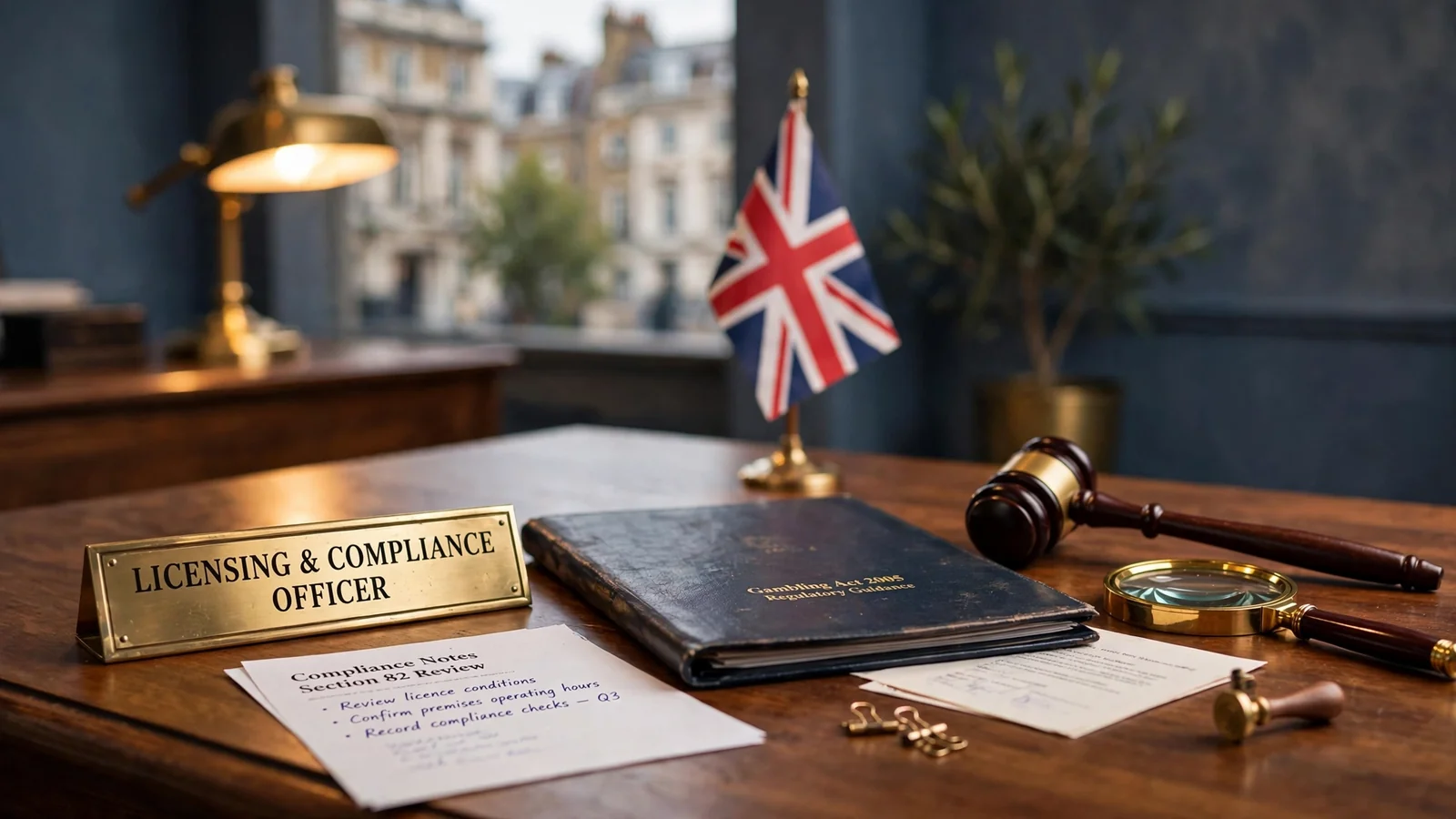
This is why phrases such as “licensed casino” can be too vague to tell you what you need to know. Ask which regulator issued the licence and which market that licence covers. If the answer is Anjouan, it does not establish that the operator holds the UKGC licence required to serve Great Britain. A foreign licence cannot fill that gap by implication.
The boundary is simple, even if the branding is not: an Anjouan licence is not British authorisation. For operators serving Great Britain, the relevant licence must come from the UK Gambling Commission, whatever their base of operation. That’s the dividing line.
What to Check Before You Trust an Anjouan Casino Site
When I assess Anjouan casino sites, I try not to confuse a smooth-looking cashier with a reliable way to get money back. A site may advertise “fast withdrawals”; what matters is what its terms say about processing, payment methods and the steps it can take before releasing a payout.
Read the withdrawal terms before depositing. Look for whether the casino can change the method it pays to, what checks may delay a request, and whether the stated processing time begins when you submit it or only after approval. If the wording is vague, treat that as uncertainty, not reassurance. Keep a copy of the terms you relied on. A page can change.
Published payout timings do not tell one consistent story. Some accounts say withdrawals can arrive within 24 hours to five business days; others warn they may take three or four weeks. That gap matters. Non-UK-regulated casinos may set more permissive deposit and withdrawal policies, which can mean fewer restrictions and quicker payouts, but that possibility is not a promise about any individual site. There is no regulatory clock requiring an Anjouan casino to meet a particular payout time.
I’d also check whether the cashier explains the route from deposit to withdrawal, and whether the site’s terms describe circumstances in which a payment can be delayed. Don’t assume that because a method accepts deposits it will necessarily be available for withdrawals. If you cannot work out the conditions before signing up, you cannot sensibly plan around them.
“Flexible” can mean fewer barriers on the way in. It does not settle what happens when you ask for your balance back. I’ve learned to judge the practical terms, not the banner: how clearly the site explains its process, whether timings are presented as estimates, and what uncertainty you would be accepting. If the answer is hard to find, that is useful information in itself.
New Anjouan Casinos: Why Verification Matters More Than the Launch
A fresh launch can look polished: new games, a welcome offer and a site that seems ready for business. I’ve learned not to treat that as evidence of how a casino will handle a withdrawal. The point at which you ask for your money is often when the account checks become important.
One specialist review has reported offshore operators asking for notarised documents or a video call before releasing a withdrawal. That is a report about some operators, not a rule for every Anjouan casino. Still, it is worth taking seriously before you deposit. A request that sounds manageable when you are signing up can feel very different when a balance is waiting to be paid.
Verification Check
- Read the site’s verification and withdrawal terms
- Identify which documents the operator may request
- Confirm if additional checks are required before releasing payouts
- Verify that personal details match identity documents
Read the site’s verification and withdrawal terms before opening an account. Look for what documents it may request, whether it can ask for additional checks later, and what happens if you cannot complete them. If the wording is vague, or the operator will not explain the process clearly, that uncertainty is part of the decision. Don’t assume that passing an initial account check means no further questions can arise.
Keep copies of the terms you relied on and any messages about verification. Make sure the personal details you provide are accurate and consistent with your identity documents. If a request arrives, ask for a clear explanation of what is needed and why, and keep the exchange in writing where possible. None of that guarantees a smooth payout. It simply leaves you better placed to understand what you agreed to and what the operator is asking for.
With a newly launched site, there may be little history to help you judge how it behaves when a customer wants to withdraw. So I would weigh the clarity of the verification rules more heavily than the shine of the launch. New doesn’t mean bad. It does mean you should be careful about finding out the hard way.
Crypto at Anjouan Casinos: Payment Convenience Has Limits
Crypto can make deposits feel simple: you send digital currency from a wallet, rather than entering card details. That convenience is real, but it can also make the boundary between paying and gambling feel less obvious. I have made that mistake with ordinary online payments: once the money is a few taps away, it is easy to stop thinking about what you are actually spending.
Anjouan crypto casinos may accept cryptocurrency alongside credit cards, e-wallets and bank transfers. Some use alternative payment processors, so the route shown at checkout may not look like a direct card payment. That does not tell you whether a particular method is available to you, or whether it can be used for every transaction. A deposit option is not a promise about what happens later.
There is a specific UK wrinkle. Crypto payments can get around the UK ban on gambling funded by credit cards because they are not themselves credit-card transactions. But getting around that payment restriction is not the same as making an operator UK-licensed, or making an unlicensed site a safe place to play. The payment method does not change the operator’s regulatory status.
I would treat “crypto-friendly” as a description of how a site takes money, not as a badge of trust. Before sending anything, check which asset and network the cashier supports, what the site says about fees, and whether the account name and payment instructions match. A transfer made to the wrong address or on the wrong network may be difficult or impossible to recover. Those are basic transaction risks, not special protections supplied by a casino licence.
There is also a budgeting problem: crypto values can move, so the amount you send may not hold the same value while you are deciding what to do next. Keep the gambling decision separate from the technology. If you would not be comfortable losing the money, don’t send it.
Crypto payments allow users to bypass the UK ban on credit-card funded gambling, but this does not change the operator’s unlicensed regulatory status.
A different rail, not a safeguard.
How to Read Anjouan Casino Reviews with Your Eyes Open
When I read reviews of an Anjouan casino, I look past the star rating and ask a less comfortable question: what happens if the operator and a player disagree?
A review can describe games, payments and customer service, but that does not tell you who can make a binding decision if a withdrawal or account dispute turns sour. Under Anjouan’s framework, the authority does not take up player complaints, mediate between the parties or adjudicate a dispute. That is a significant limit, not a small detail buried in the terms.
Anjouan-licensed casinos also do not offer an independent dispute-resolution route comparable to the approved alternative dispute resolution services used by UK Gambling Commission-licensed operators. So a review saying “support sorted it” may describe one person’s outcome; it does not mean you have access to an independent body if your own complaint goes nowhere.
I used to treat a stack of positive reviews as a kind of safety net. It isn’t one. Reviews can help you spot recurring complaints, but they cannot create a regulator-backed route to a remedy. And if the operator changes its position, a reviewer’s account does not give you recourse through UK regulators.
Read the details, not just the verdict. Does the review explain what the complaint was, what the casino said, and whether the player actually received a resolution? Is it clear where the account comes from, or is praise doing all the work? A dramatic success story can be as hard to assess as a one-line warning.
That does not make every review useless. It means you should treat it as someone’s account, not protection you can rely on. If something goes wrong, the key question is not whether the casino has good reviews; it is what route remains when its own support cannot resolve the issue.

That distinction matters.
Offshore Licensing: Anjouan Among Other Jurisdictions
Anjouan is one name in a wider group of jurisdictions associated with non UK regulated casinos. Malta, Curaçao and Gibraltar also appear in this landscape. Seeing one of those names on a site tells you where its licence is associated with; it does not, by itself, tell you how to compare the casino with another one.
I used to treat a licence label like a quick quality mark. That was a mistake. A familiar jurisdiction can sound reassuring, while a less familiar one can look suspicious, but the name alone is not enough to judge a particular operator. An Anjouan casino licence is one piece of context, not a ranking and not a recommendation.
The same goes for casinos linked to Malta, Curaçao or Gibraltar. Those jurisdictions are commonly associated with non UK regulated casinos, but grouping them together does not make their licences identical. Nor does the shared category tell you which site is better for a player. The operator and its own terms still matter.
When I see a jurisdiction named in a casino’s footer, I now read it as a starting point for understanding the site’s background, rather than a stamp that settles every question. I would not assume that two casinos have the same oversight simply because both sit outside the UK system, or that one is safer because its jurisdiction is more familiar to me.
Names are context. Nothing more.
This wider landscape can make the wording around a casino feel more authoritative than it really is. “Internationally licensed” may sound like a meaningful comparison, but the phrase alone does not explain what a specific licence covers. Anjouan belongs in the conversation alongside Malta, Curaçao and Gibraltar because all are jurisdictions associated with non UK regulated casinos—not because the label tells you what to choose.
What happens if you have a dispute with an Anjouan-licensed casino as a UK player?
You do not have access to an independent dispute-resolution route comparable to UKGC-approved ADR, and the Anjouan authority does not mediate player complaints. The operator must respond to complaints within 30 calendar days.
What payment methods work best at non-UK-regulated casino sites?
Offshore casinos may accept credit cards, e-wallets, bank transfers and cryptocurrencies, often through alternative processors. Some also let you pay by mobile phone bill or prepaid balance; check which methods the casino accepts and how its withdrawal rules apply.
Are non-UK-regulated casinos legal for you to use as a UK player?
UK law does not explicitly prohibit you from using gambling services licensed abroad, and players do not commit a criminal offence simply by gambling on an unlicensed site. However, operators serving customers in Great Britain require a UK Gambling Commission licence, and an Anjouan licence does not provide one.
Are sites that are not on GamStop legal for you to access in the UK?
UK law does not explicitly prohibit you from using gambling services licensed abroad, and players do not commit a criminal offence simply by gambling on an unlicensed site. Sites outside GamStop are not part of the UKGC’s self-exclusion scheme; operators serving customers in Great Britain still require a UKGC licence.
Are gaming sites not on GamStop permitted for you to use in the UK?
UK law does not explicitly prohibit you from using gambling services licensed abroad, and players do not commit a criminal offence simply by gambling on an unlicensed site. But being outside GamStop does not authorise an operator to serve customers in Great Britain without a UKGC licence.
Written by the editors at Candyland Casino 4.