Mines Casino Game UK: Rules, Odds and Demo Play
 Available in GB
A familiar name cannot verify a game’s setup, outcomes or payouts; demos and streaks are not evidence of a winning system.

Table of Contents
- What a Mines-Style Casino Game Can—and Can’t—Tell You
- Online Casino Games: Different Formats, Different Setups
- Free Play, Bonuses and the Small Print
- How to Approach a Game When the Rules Aren’t Verified
- A Demo Is Practice, Not Proof of a Winning Pattern
- “Best” Depends on What You Can Actually Verify
- Strategies and Patterns: Why a Streak Isn’t a System
- Playing for Real Money in the UK: Check the Ground Rules
- How the Odds Work—and Why There’s No Guaranteed Win
- What a Simulator Can Show You
What a Mines-Style Casino Game Can—and Can’t—Tell You
“Mines” sounds specific. It can bring to mind a familiar kind of pick-and-reveal game, but the name alone does not tell you which version someone means. A title, thumbnail or short advert is not a full description of the game behind it. Even if two products use similar names or imagery, that does not establish that they share rules, outcomes or payouts.
That distinction matters when you come across claims about a Mines casino game in the UK. The phrase may describe a game offered by one operator, a branded title from a developer, or simply a general style of casino game. Without identifying the actual product, it is easy to treat a familiar label as proof that you know how it works. I have made that mistake with casino games before: I recognised the look and assumed I understood the deal. I didn’t.
What can be said about casino games in general is simpler. Players stake cash or chips on possible random outcomes, or on combinations of outcomes. A result may go the player’s way in the short term; that possibility is part of what makes gambling appealing. But casino games typically give the casino a predictable advantage over the long term. Those two points can sit together: a player can win on a particular occasion, while the game’s overall design still favours the casino over repeated play.
That general picture does not identify the terms of any particular Mines-style title. The name does not establish what counts as a result, how a stake is treated, what a displayed amount represents, or whether a particular version uses the same setup as another. Nor does a dramatic screen or a string of apparent successes, on its own, tell you what the game’s long-run balance is. Familiarity is not verification.
I also wouldn’t take “Mines casino” to mean there is one standard game with one official set of rules. Casino titles can be presented under similar labels while differing in details that matter to a player. A description may leave out those details; a promotional image may show only the most exciting moment. Neither is enough to support confident claims about a game’s odds or what a player can expect to receive.
The word “fair” gets used loosely in gambling promotions. It can sound like a promise that the player has a good chance, or that a win is around the corner. Those are different claims. A random outcome is not a prediction of the next one, and a casino game’s general possibility of short-term gains is not a promise that any particular player will gain. The long-run advantage is the less flattering part. Still important.
It helps to keep three ideas separate: the label attached to a game, the rules of the actual product, and the general nature of casino gambling. The label may help you recognise what people are talking about. The rules define what the game does. And the broad casino context is that players stake value on uncertain outcomes, with the operator typically holding a long-term mathematical edge. Mixing those together can make a guess feel like knowledge.
So, if you are trying to understand a Mines casino game, the safest starting point is modest: the name tells you the topic, not the full mechanics. General casino facts can explain why a game may offer a chance of a short-term win while still favouring the house over time. They cannot, by themselves, establish how a particular title works or what its individual terms mean.
That is not a reason to assume every version is identical, or to treat a bold claim as settled. It is just a useful boundary. A name can spark curiosity. It cannot do the explaining for you.
Online Casino Games: Different Formats, Different Setups
When I look at an online casino, I find it more useful to sort the games by how they are set up than by how dramatic their names sound. A search for a Mines game online can sit alongside slots, number-based games and table games, but those labels do not all describe the same thing. Some point to the way an outcome is produced; others describe the style of play or the setting.
A computer or gaming equipment generates random numbers to determine the result.
A machine-based setup designed for one player at a time without needing casino staff.
Games where players compete against the casino, usually conducted by a croupier or dealer.
That distinction matters. “Online casino game” is a broad category, not a promise that every title works alike. Casino games involve gambling cash or chips on possible outcomes, and they are available online where permitted by law. Beyond that, the format can change what you see on screen and how the game is presented. I used to skim the lobby and assume the familiar-looking tiles belonged to one big family. They don’t.
Random-number games
In a random-number game, a computer or other gaming equipment generates selected random numbers. The result is then determined using those numbers. That is a useful broad description, but it does not tell you the precise rules of any particular title. The same general category can contain games with very different interfaces and ways of presenting an outcome.
This is one reason the words “Mines casino” do not, by themselves, tell you what kind of product is being offered. A title might be presented as a self-contained digital game, but its name alone does not establish how it is classified or how its outcomes are generated. You need the game’s own description and rules for that. The broad category is a starting point, not a substitute for the details.
Online casinos can make random-number games look very different from one another. One may use a familiar visual theme; another may display a simple panel of choices. The appearance is not enough to identify the underlying format. I’ve learned not to treat a sleek screen or a recognisable word in the title as an explanation. Looks are cheap.

Gambling machines
Gambling machines are generally designed for one player at a time and do not need an employee of the casino to run each play. Online, that broad idea may be represented through a digital interface rather than a physical cabinet, but the category is still about a machine-based setup.
The word “machine” can also bring to mind a particular style of casino game, especially the kind arranged around repeated individual plays. But not every screen-based game should automatically be called a machine game just because you use a device to access it. The phone or computer is the delivery method; it does not, by itself, define the game’s category.
That distinction helps when comparing a Mines-style title with other things in a casino lobby. If a game is presented in a machine-like format, it may feel quite unlike a table game even though both are available through the same website. The common setting does not make the mechanics interchangeable.
Table games
Table games have a different structure. Players compete against the casino, not against one another, and the games are usually conducted by a croupier or dealer. In an online setting, the presentation may differ from being seated at a physical table, but the defining relationship remains: the casino is the opponent, rather than the other players at the table.
A shared digital interface does not mean games share a format; table games, machine games, and random-number titles may all appear as similar clickable tiles.
Not every casino game involves a dealer, and not every game that appears in a casino lobby is a table game. It sounds obvious when written down, but the labels can blur once everything is reduced to buttons and graphics. A table-game layout, a machine-style screen and a random-number title may all appear as clickable tiles; the shared interface does not mean they share a format.
What the categories tell you
These broad groups are useful for orienting yourself, not for filling in missing details about a particular title. Random-number games describe one way outcomes can be generated; gambling machines describe a setup generally used by one player without staff involvement; table games describe play against the casino, commonly with a dealer or croupier. The categories overlap in how an online casino presents them, but they are not synonyms.
So if you come across a Mines game in an online casino, treat the title as a label, not a full explanation. The surrounding lobby can tell you what other kinds of games are offered, while the game’s own information is what identifies its particular format. That’s a better way to read the menu than assuming every game with a bold name follows the same pattern.
Free Play, Bonuses and the Small Print
“Free” can mean two different things on a casino page. You might be able to look around or use a game without staking cash, if the platform offers that option. Or you might be looking at a no-deposit bonus: a promotional reward the casino says you can receive without spending your own money. Those are not interchangeable. A bonus comes with conditions, and the word “free” does not tell you what you can withdraw, which games count or what you must do first.

I’ve learned not to treat a banner as the terms. The offer page may put the headline in large type and leave the important conditions in a link or a separate set of rules. Before accepting anything, find the full terms and make sure they refer to the promotion you are actually being offered. If the conditions are hard to locate or unclear, that is a reason to pause, not a reason to guess.
What does “no deposit” actually mean?
A no-deposit bonus is a casino bonus that does not require you to spend money to receive it. It does not, by itself, mean that you have access to every game without staking cash, or that any bonus balance can be withdrawn immediately. Read what the promotion supplies and what must happen before money can be taken out.
Also check whether the offer is a bonus balance, free spins or another kind of incentive. A label such as “free casino play” can sound straightforward while concealing different conditions. A specialist review notes that some casinos cap winnings from free spins. In practice, that means the amount you can keep may be limited even if the spins produce a larger win. Look for any cap, and check whether it applies to the winnings, the bonus balance or both.
Some casinos may cap winnings from free spins, meaning the amount you can keep might be limited even if the spins produce a larger win.
A welcome package may also be split into stages. A specialist review describes minimum deposit thresholds applying to each stage, so check whether a later part requires another deposit rather than assuming the whole package arrives at once. The amount and conditions should be stated in the offer itself. If they are not, do not fill in the blank from what another casino advertised.
Wagering requirements are a calculation
Wagering requirements tell you how much you must stake before bonus funds or related winnings become eligible for withdrawal. The multiplier matters: a £100 bonus with a 35x requirement calls for £3,500 in total stakes. That is a calculation of turnover, not a promise that you will still have the bonus by the time you reach it.
A smaller illustration shows why the multiplier deserves attention. A £20 bonus with 10x wagering means £200 in total stakes. Neither example tells you what you will win or lose along the way. It simply shows the amount of betting the stated condition requires. Read whether the requirement applies to the bonus, the bonus plus deposit, or another stated amount; do not assume those definitions are the same.

Since 19 January 2026, a specialist review reports that gambling incentives cannot require more than 10x wagering of bonus funds. Treat the written terms of the specific promotion as the place to verify what is being offered, and be wary of a headline that seems to promise one thing while the conditions say another. One promotion also cannot combine different gambling product types, such as casino play and betting, as a condition of unlocking the reward.
Read the terms before you opt in
Before accepting an offer, check:
- Who can take part. Offers require participants to be 18+ and UK residents. Check any other eligibility conditions shown in the terms.
- What you have to do. Confirm whether a deposit is required, whether the offer has stages and what actions count towards the wagering requirement.
- Which games qualify. Make sure the terms explain where the bonus can be used and whether different games are treated differently.
- What can be withdrawn. Look for limits on bonus winnings, free-spin winnings or the amount that can be cashed out.
- When the offer ends. Read any expiry conditions carefully so you know how long the bonus remains available.
- How to decline or remove it. If you do not want the offer, check the operator’s instructions before opting in or depositing.
That last check is easy to skip when the promotion is presented as an obvious extra. I have done that. A bonus is not automatically useful just because it costs nothing to claim; the conditions can make it a poor fit for how you intended to play.
If you are looking for free Mines-style casino play, keep the two ideas separate: a no-cash way to access a game, if offered, is not the same thing as a casino bonus. A bonus is an offer governed by its terms. Read those first. The headline can wait.
How to Approach a Game When the Rules Aren’t Verified
A “how to play” guide is only useful if it describes the version in front of you. With a Mines-style casino game, the name alone is not enough to tell you what the controls do, what counts as a result or when a stake is committed. I wouldn’t start by copying a tip from somewhere else. I’d start with the rules shown by the operator.
- Start with the rules shown by the operator
- Find the game’s information panel
- Establish the stake before starting
- Copy tips from other sources
- Rely on a walkthrough for another platform
- Assume a familiar screen is self-explanatory
That sounds obvious. It’s easy to skip.
Before you press anything, find the game’s own information panel or rules page. Check how a round begins and ends, what each control does, and how the displayed stake relates to a possible outcome. If the wording leaves you unsure whether an action places a bet or changes a setting, stop there. A neat-looking interface is not an explanation.
Casino games involve risking cash or chips on possible random outcomes, or combinations of outcomes. So “just trying it” can still mean gambling if a cash stake is involved. The distinction matters more than the label on a button. I’ve been too quick to treat a familiar-looking screen as self-explanatory; that is how a small click can turn into a decision I hadn’t properly made.
If you are considering playing for money, establish the stake before starting and make sure you understand how the game handles it. Read the displayed terms rather than relying on a walkthrough for another platform. Even when two games share a name or visual style, their controls and rules should not be assumed to match. If you cannot tell what happens to your stake, don’t place it.

For someone looking to play without staking cash, check what the platform actually offers and what its wording means. “Free” can describe different things in different places; it is not enough on its own to establish that no money is at risk. Don’t infer a free mode from a promotional banner, a game title or a tutorial. Confirm the conditions on the page where you would launch the game.
The same caution applies to tips. A short list of supposed Mines tactics may sound actionable, but it cannot substitute for knowing the rules of the particular version. A tip that depends on a control or feature the game does not have is useless; one that encourages you to stake before you understand the screen is worse. I’d rather spend a minute reading than pretend that confidence is the same as knowledge.
If the instructions are unclear, incomplete or hard to find, leave the game alone until they make sense. Gambling machines are generally designed for one player at a time and do not require an employee to operate them, so there may be no person beside you to explain a confusing screen. That puts the burden on you to pause, not guess. No shame in backing out.
The practical test is simple: can you explain what you are about to do, what stake is involved, and what the game says will happen next? If not, you are not ready to play that version. I’ve learned that the hard way. A few seconds of uncertainty are a good reason to stop, not a challenge to overcome.
Practical Test
If you cannot explain what you are about to do and what stake is involved, you are not ready to play that version.
A Demo Is Practice, Not Proof of a Winning Pattern
If a Mines demo is available on a platform you are considering, treat it as a way to get your bearings—not as a preview of what cash play will do. A demo can let you see how the game is laid out and whether you can follow its instructions. That is useful. It is not evidence that a particular sequence will work when money is involved.
I’ve made the mistake of thinking that a few smooth practice rounds meant I had “got it”. What I had got was the interface. Those are different things.
Use a demo, if offered, to check the practical details in front of you. Can you tell what each control does? Are the rules and any stated stakes clear before you start? Can you understand what the game says has happened after a choice? If you have to guess, or the instructions leave an important point unclear, don’t fill the gap with assumptions. Pause and look for an explanation from the platform.
That is a modest job for a demo, but a worthwhile one. You can notice whether the presentation makes sense to you without putting cash at risk. You can also decide that a game is confusing or simply not for you. No grand theory required.

The boundary matters. A practice session is not a test of whether you can predict future results. Random-number games use selected numbers generated by a computer or other gaming equipment; seeing a run of outcomes in a demo does not give you a dependable way to know what comes next. A streak can feel like a clue. It is still just a run you have seen.
Nor should a demo result be read as a promise about cash play. Casino games typically leave the casino with a predictable long-term advantage, even though players can have short-term gains. A few favourable demo outcomes do not overturn that basic picture, and a rough session does not prove that the next one must be better. Practice shows you what happened during practice. That’s all.
I’d also avoid treating the word “demo” as a guarantee that every version offers the same experience. The title, rules, interface and availability need to be established on the platform itself. If you cannot find a clear explanation of what the practice mode does, don’t assume it behaves like a cash round or that it uses the same conditions. The label alone can’t settle that.
So, if you find a Mines casino game demo, keep the aim narrow: understand the controls and the stated rules, and decide whether the game is clear enough for you to follow. Don’t use practice outcomes to build a winning system or to justify staking money. I’ve confused familiarity with an edge before. It wasn’t one.
“Best” Depends on What You Can Actually Verify
When choosing a UK casino for Mines in 2026, payout timing is one practical detail to check. Use this list to see the stated payout speed for each operator.
Payout speed: 1-3 business days Jetsetspins lists a payout speed of 1–3 business days.
Payout speed: 1-3 business days x3bet lists a payout speed of 1–3 business days.
Payout speed: 1-3 business days Revery Play lists a payout speed of 1–3 business days.
Payout speed: 1-3 business days Zombillion lists a payout speed of 1–3 business days.
Payout speed: 1-3 business days NightLuck lists a payout speed of 1–3 business days.
Payout speed: 1-3 business days Amunbet lists a payout speed of 1–3 business days.
Payout speed: 1-3 business days WinBeast lists a payout speed of 1–3 business days.
Payout speed: 1-3 business days Chanze lists a payout speed of 1–3 business days.
Payout speed: 1-3 business days EvoSpin lists a payout speed of 1–3 business days.
Payout speed: 1-3 business days NightWin lists a payout speed of 1–3 business days.
I’m wary of any page that calls one Mines casino the “best” without showing what that judgement rests on. A polished design or a confident claim about a game tells you little about who operates the site or which rules apply to it. I’ve been taken in by the gloss before. It wears off.
A specialist review describes the UK online casino market in 2026 as having two distinct sides: UKGC-regulated operators and offshore platforms outside that system. The distinction matters more than a ranking. Offshore casinos may accept UK players, but that does not put them under UKGC oversight. A site being reachable from Britain is not the same as being licensed to serve British residents.
The legal position is clear: since the Gambling (Licensing and Advertising) Act 2014, operators taking bets from British residents must hold a licence. So, before treating a site as a serious option, check its operator name and licence status against the UKGC’s own register. Make sure the name on the site matches the registered business; a badge or a line of small-print claims is not the same check.
Licensing Check
Operators taking bets from British residents must hold a UKGC licence; verify the operator name against the UKGC register before depositing.
That changes what “best” should mean. Instead of trusting a label, look for evidence you can verify: who runs the platform, whether its UKGC status is current, and whether its terms and game information are plainly available. If the operator’s identity is hard to pin down, or the licensing claim cannot be matched to the register, I would not treat a favourable review as reassurance.
You may also come across the phrase “non GamStop sites”. That label does not establish a UKGC licence. Offshore platforms sit outside the UKGC system even when they accept people in Britain, so do not confuse access with the protections and oversight attached to a UKGC-regulated operator. Different footing. Be clear-eyed about it.
I can’t honestly give you a universal winner for a Mines-style game from a headline or an affiliate ranking. The useful comparison starts with verifiable operator status, not claims that a site is “top” or “trusted”. Check who is actually behind the platform, then decide whether its position in the UK market is one you are comfortable with. If that basic information is muddy, I’d stop there. No ranking can fix that.
Strategies and Patterns: Why a Streak Isn’t a System
I understand the appeal of looking for a pattern. A few good results arrive close together and it feels as if you have spotted something: a rhythm, a safer moment, a sequence worth repeating. I’ve caught myself doing the same thing, especially after a win. The story in my head was neat. The evidence was not.
That is the trap behind many claims about a Mines strategy. A streak tells you what happened in that stretch; by itself, it does not show that the next result is more likely to go your way. Repeating a choice because it worked before may feel disciplined, but the feeling of control is not proof of an edge.
A streak of wins is a reflection of what happened in a specific stretch, not proof of a dependable system or a predictable edge.
Casino games can give players short-term gains. That is part of why a run can seem convincing: you may win, and a small run of wins can make a system look as if it has been tested. But casino games typically give the casino a predictable advantage over the long term. A good spell does not cancel that out, and a losing spell does not promise that a win is due.
So when you see a “winning pattern”, ask what it actually establishes. Is it just a story built from a handful of outcomes? Does it depend on someone showing only the successful attempts? Does it claim certainty where the result is still uncertain? If the explanation skips those questions, I would treat the confident language as sales talk, not a reliable method.
A strategy can still help you make deliberate choices about how you approach gambling. It cannot turn a streak into a dependable system or guarantee a return. I learned that the irritating way: after a win, I wanted to believe I’d worked something out. Sometimes I had simply won that time.
Keep the distinction plain: a short-term gain is possible; a long-term advantage for the casino is typical. Neither observation tells you that a particular pattern will predict what comes next. If a claim promises that it does, the promise is doing more work than the evidence. That’s the bit I watch for.
Playing for Real Money in the UK: Check the Ground Rules
A real-money game is not just a game screen with a cash balance beside it. In England, Scotland and Wales, an operator taking real-money gambling from customers must hold a licence from the UK Gambling Commission (UKGC). That applies whether the game is called Mines or something else. If an operator is outside the UKGC system, it is not a UKGC-licensed option for British players.
I’ve learned not to treat a familiar-looking site or a smooth deposit page as proof of anything. The licence is the key boundary here, not the game’s name or the way its graphics look. Online gambling in the UK is legal at licensed and regulated sites, and players must be 18+.
Payments have rules too. UK-licensed casinos cannot accept credit cards for gambling. The restriction also catches credit-card funds routed through a money service business, and operators cannot accept wallet payments where a credit card can be used to fund gambling. A payment method appearing in the cashier does not automatically mean every way of funding it is allowed.
There are practical protections attached to licensed play. Operators must verify your age before allowing a deposit, and remote operators must prompt new customers to set a financial limit before their first deposit. Account-level limit controls must remain accessible. UKGC licensees must also provide responsible-gambling tools, including self-exclusion, and an internal complaints process with access to an approved Alternative Dispute Resolution service.
That is a lot less exciting than a bright “instant cash” message. It matters more. If you are considering playing Mines for cash, separate the question of whether a game is available from whether the operator is authorised to take your money in the relevant part of the UK. I would not assume that a site accepting a deposit has met that standard. The boundary is regulatory, not cosmetic.
UK Real-Money Play
- Verify the operator holds a UKGC licence
- Confirm you are 18+ and a UK resident
- Ensure no credit cards are used for funding
- Set a financial limit before the first deposit
- Locate responsible-gambling tools and self-exclusion options
How the Odds Work—and Why There’s No Guaranteed Win
A game can pay out on one turn and still be built to favour the casino over time. Those two things are not contradictory. Casino games involve stakes on possible outcomes; a player may come away ahead in the short term, while repeated play generally gives the house a predictable long-term advantage.
That is the useful answer to how Mines works in terms of winning: no payout claim can make a win certain. The name alone does not tell you the odds. Different games or versions can have different rules, and without the actual rules and payout information in front of you, there is no sound basis for calculating what a particular choice is worth. I used to treat a promising-looking payout as if it were the same thing as a good chance. It isn’t.
A displayed prize is only one part of the picture. The chance of reaching it matters too. If you cannot see how the game defines outcomes and what it pays for them, you cannot judge the relationship between risk and reward. A large possible return is not evidence that a player is likely to get it, let alone that they can repeat it.
“Easy win” is marketing language, not a property of the odds. A run of wins can happen; so can a run that gives back earlier gains. Neither changes the basic long-term advantage built into casino games. A winning session is possible, but it does not show that the next session is more favourable or that a profit can be secured by continuing.
I’ve made the mistake of looking at a good result and assuming I’d found something dependable. That feeling arrives quickly. The maths doesn’t care.
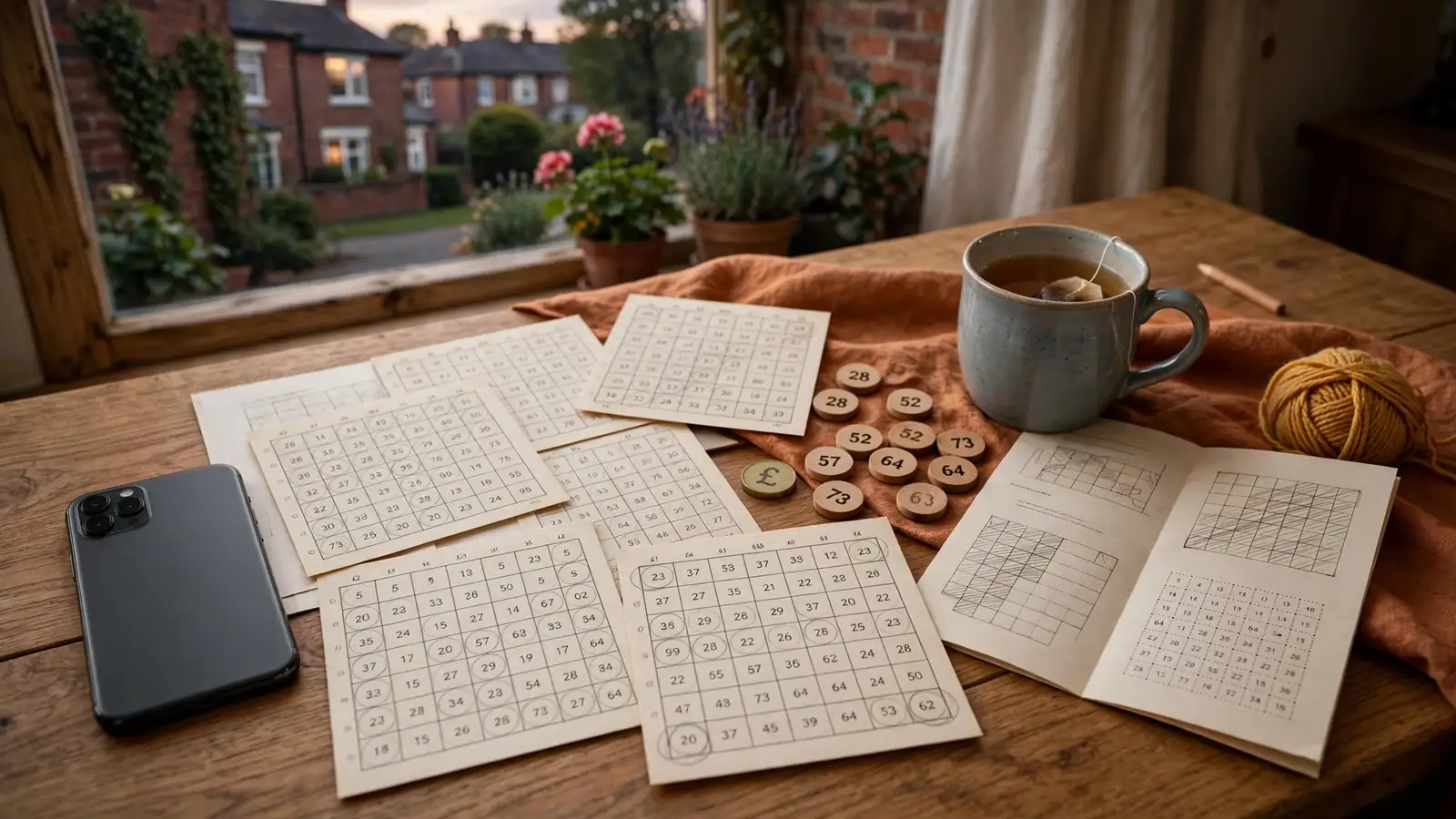
So if you are asking how to win, the honest answer is that no method can promise it. You can judge a game only from its actual rules and payout information, and even then, an estimate of the odds is not a guarantee of what will happen in a particular session. There can be a win. There is no assured one.
What a Simulator Can Show You
A simulator can make random outcomes easier to picture. Random-number games use numbers selected by a computer or other gaming equipment; a simulation can model that process and display a run of results. Useful for seeing how varied a sequence can look. Not a forecast.
That distinction matters with a Mines-style casino game. A simulator labelled for Mines may reflect assumptions chosen by whoever built it. Unless those assumptions match the actual game’s rules and outcome system, its results tell you about the model, not necessarily the title you have in mind. The label alone proves nothing.
I used to look at a run of simulated results and feel as if I’d spotted something. I hadn’t. A cluster of outcomes can look meaningful when you view it after the event, but a simulation cannot show that the next result will follow the same shape. It can’t turn randomness into a dependable pattern.
The sensible use is narrower: observe how a random process can produce different-looking sequences, and notice how easily a short run invites a story. If the simulator explains what it is modelling, you can assess that model. If it does not, treat the output as an illustration, not evidence about a particular casino game.
And don’t read simulated wins as a promise of cash results. The model may omit the real game’s rules, stakes or other conditions; even a close match would describe possible outcomes, not tell you which one comes next.
Interesting to watch. That’s all.
Published by the Candyland Casino 4 team.