3-Reel Slots in the UK: How Online Play Works
 Available in GB
A look at online presentation, play limits, free trials and the difference between reel count and betting options.

Table of Contents
- Why Three Reels Feel Different Online
- Real-Money Play: The Licence and the Limits
- Classic Reels, Tried Without the Cash
- Three Reels Aren’t the Same as Three Ways to Bet
- How to Try a Three-Reel Slot for Free
- Fruit Symbols and the Old Fruit-Machine Feel
- What Slot Odds Can—and Can’t—Tell You
- Game Features, Variance, and the Live Casino Detour
- No Download: Check the Game, Not a Promise
- Traditional Slot Strategy: Keep It Simple
Why Three Reels Feel Different Online
A three-reel slot has a stripped-back look: a short row of reels, symbols moving through the window, then a result to read. Online, that simplicity can be deceptive. The game may look like a familiar machine, but you are using a screen, and the spin follows rules designed for remote play in Great Britain. I find it helps to separate the visual style from the way an online game actually runs.
On a physical machine, the movement and sounds give a spin a clear beginning and end. Online, those cues come through animation and audio, and the buttons sit close to the reels. A quick tap can feel like part of the rhythm, even though it does not make the result arrive sooner. The screen can also make the game feel more immediate than it is: you are watching a designed display, not reaching into a machine and changing what happens.
That matters when comparing classic 3 reel slots online with newer-looking games. Three reels describe the layout, not a guarantee of a particular pace, sound, or way of playing. One game may keep its presentation spare; another may dress the same basic arrangement in extra visual effects. The online format gives developers room to change the look, but the reel count remains the obvious first clue.
When you’re choosing a reel slots site in the UK, practical details matter alongside the games. Use the listed payout information as one point to consider when deciding where to play.
Payout speed: 1-3 business days Jetsetspins lists a payout speed of 1–3 business days, giving you a stated timeframe to consider.
Payout speed: 1-3 business days x3bet lists a payout speed of 1–3 business days, a useful detail for you to bear in mind.
Payout speed: 1-3 business days Revery Play lists a payout speed of 1–3 business days, so you have a stated timeframe to factor into your choice.
Payout speed: 1-3 business days Zombillion lists a payout speed of 1–3 business days, giving you a concrete payout detail to consider.
Payout speed: 1-3 business days NightLuck lists a payout speed of 1–3 business days, which gives you a stated expectation for payouts.
Payout speed: 1-3 business days Amunbet lists a payout speed of 1–3 business days, a practical detail for you to note.
Payout speed: 1-3 business days WinBeast lists a payout speed of 1–3 business days, giving you a stated timeframe to take into account.
Payout speed: 1-3 business days Chanze lists a payout speed of 1–3 business days, so you can factor that timeframe into your decision.
Payout speed: 1-3 business days EvoSpin lists a payout speed of 1–3 business days, providing you with a stated payout timeframe to consider.
Payout speed: 1-3 business days NightWin lists a payout speed of 1–3 business days, giving you a practical detail to keep in mind.
A spin also has a defined cycle. In Britain, an online slot must allow at least two and a half seconds to pass from the start of one game cycle before another can begin. Autoplay is not allowed for online slots. Those rules affect the rhythm: the game cannot simply run unattended through a chain of spins, and the next cycle cannot start instantly. It is a small pause, but it makes the controls part of the experience rather than an invisible detail.
I used to read a fast-looking animation as a sign that I could hurry through a session. That was a mistake. Animation is presentation; it does not turn a result into something you can steer. With a three-reel slot, the compact layout can make each stop easy to follow, but the display still does not give you control over the outcome. A neat row of symbols is not a promise of predictability.
The stake rules are worth understanding without turning this into a real-money checklist. A specialist review reports that the online slot limit in Great Britain is £5 for a customer aged 25 or older, and £2 for someone aged 18 to 24, for each game cycle. Those are caps on the stake for a cycle, not a suggested amount to spend. If you are simply trying to understand how a game feels, the important point is that the online version operates within rules that shape what a spin can involve.
The phrase “classic” can also blur two different things: the appearance of a traditional machine and the experience of playing through a browser or app. A 3 reel slot machine on a screen may borrow the compact format people recognise, yet it is still an online game, with digital controls and a set time before another cycle can start. Familiar-looking does not mean identical. That took me a while to stop assuming.
There is no need to make the format sound more mysterious than it is. You see the reels, choose the available controls, and the game presents a result. The online setting adds a screen-based interface and rules around the timing of play. Those details are easy to overlook when a game is designed to feel simple, but they are part of what makes online 3 reel slots different from the machine-shaped idea in your head.
I’d pay attention to how the game presents each cycle, not just how old-fashioned its artwork looks. Are the reels clear? Does the interface make it obvious when a spin has finished? Is the pause before the next cycle noticeable? These are practical differences you can actually observe. They tell you more about the online experience than a label such as “authentic,” which is often just another way of saying the design resembles a traditional machine.
Three reels, then, are a visual starting point rather than a full description. Online play has its own pace, its own controls and limits on how quickly cycles can follow one another. The format may feel familiar. The setting isn’t.

Real-Money Play: The Licence and the Limits
A real-money three-reel slot is still a gambling product, whatever its old-fashioned look. Before I think about a game’s theme or whether it feels like a fruit machine, I check who is offering it. A familiar design can make a site feel harmless. That feeling tells you nothing about its legal status.
In Great Britain, the UK Gambling Commission is the sole regulator of commercial gambling. Its remit covers online casinos and remote gambling offered to customers in Great Britain, even when the operator’s key equipment is located elsewhere. So a company cannot sidestep the rules simply by running its servers from abroad.
The Commission issues operating licences to businesses and personal licences to individuals who work in relevant roles. Those are different things: a personal licence is not the permission a casino needs to offer gambling to customers. For real-money play, the operator needs the appropriate operating licence.
I used to treat a licence badge on a page as enough. It isn’t a useful check unless you confirm it independently. Search the UK Gambling Commission’s public register for the operator and verify that its licence is current before depositing. A logo or a line of reassuring text is easy to display; the register is where you can check the claim.
There is a reason this matters beyond paperwork. A UK-licensed operator has obligations around how it accepts customers and manages gambling accounts. It must verify your age before allowing you to deposit, and it must prompt new customers to set a financial limit before the first deposit. Account-level limit controls also need to be accessible. I regard those as part of the basic setup, not as optional extras to find only after something has gone wrong.

Payment rules are another boundary. UK-licensed casinos cannot accept credit cards for gambling, including where a credit-card payment is routed through a money service business. They also cannot accept a wallet payment if that wallet lets credit-card funds be used for gambling. If a payment route sounds like a workaround, don’t assume it is permitted.
A licensed casino must also provide responsible-gambling tools, including self-exclusion. If you need to raise a complaint, the operator must have an internal complaints process and access to an approved Alternative Dispute Resolution service. Those protections do not make a session risk-free, and they do not turn a slot into a reliable way to make money. They do give you defined routes to take when an account or complaint needs attention.
I find it easier to check the operator before I get attached to a particular game. That applies whether the reels look retro, whether you are browsing for a free version, or whether a title is presented as one of the best real-money options. The look of a game and the licence status of the site are separate questions. Don’t let one answer stand in for the other.
There is no special licence category just because a slot has three reels. The important distinction is whether the operator is authorised to offer gambling to customers in Great Britain. Check the business on the public register, read the account terms, and make sure the controls are visible before you put money in. That takes less effort than trying to sort out a problem after the fact.
Verify Operator Licence
- Search the UK Gambling Commission’s public register for the operator
- Confirm the operating licence is current
- Verify that age verification is required before depositing
- Ensure financial limit prompts are present for new customers
- Check for accessible account-level limit controls
- Confirm that credit cards are not accepted for gambling
The boring check first. It’s worth it.
Classic Reels, Tried Without the Cash
Classic three-reel slots have a stripped-back look that can feel different from the busier video slots beside them. When I want to see whether that old-school style still holds my attention, I’d rather try a free-play version first than mistake a familiar design for a good experience. The distinction matters: free play uses fictional money, and any wins stay on screen. They are not paid out.
That makes a free classic slot a way to sample the presentation, not a preview of a cash result. You can get a feel for the pace of the game and whether its layout appeals to you. But a pretend balance has no value outside that session, however satisfying it looks while it climbs. A win in free play is still pretend. Worth remembering.
The classic format often appeals because it puts the reels front and centre. There may be less visual bustle than in a modern video slot, though appearances vary from game to game. I find that restraint can make a spin easier to follow: the symbols and their arrangement are the focus, rather than a stream of extra animations. That is a preference, not a promise that every classic game is plain or that every video slot is elaborate.
The comparison between classic slots and video slots is not a clean split between “simple” and “complicated”. A three-reel label tells you how many reels the game shows; it does not, by itself, tell you what rules or features sit around them. A classic-looking game can still have details worth checking, while a video slot can be visually busy without being hard to understand. I’ve learned not to judge the whole game from its skin. Looks can mislead.
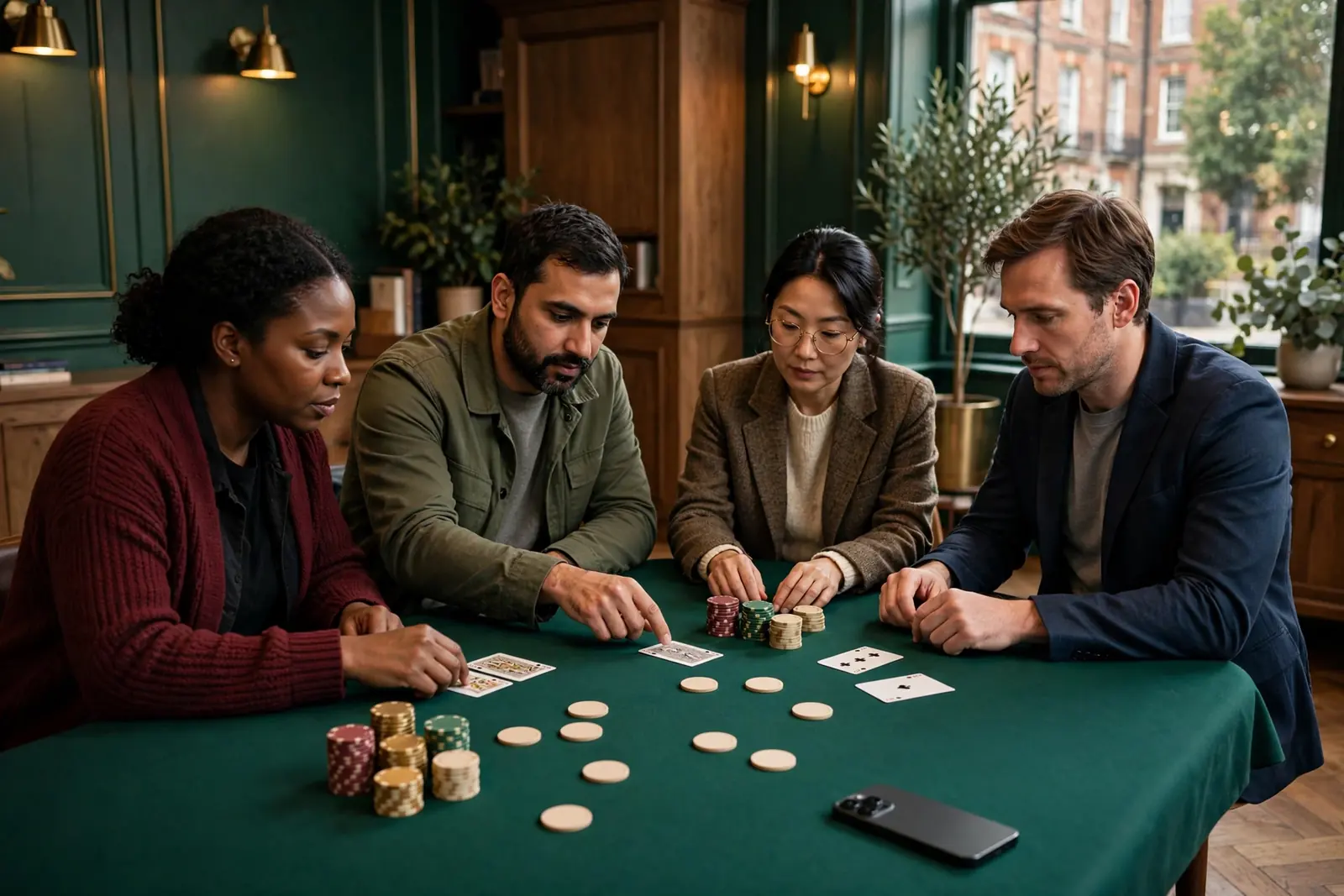
Trying classic 3-reel slots for free can help answer a narrower question: do you enjoy this style enough to keep looking at it? It cannot tell you that a real-money session would feel the same, because there is no cash at stake and no payout to collect. The fictional balance also removes the financial consequence that changes how a real session feels. So I treat the free version as a look at the game, not evidence of what playing for money would be like.
I’d also avoid turning “best classic 3 reel slots” into a universal verdict. Best depends on what you want from the format: a familiar appearance, a calmer screen, or simply a short diversion. Without knowing what matters to you, a ranking would say more about the person making it than about the game. I’d rather notice whether the presentation suits me than trust a bold label.
If you want to play a three-reel slot without cash, keep the word “free” in its proper place. It means the balance is fictional and payouts are not awarded; it does not mean that a displayed win can later be claimed. That simple boundary makes the trial easier to interpret. Enjoy the old-school look if it works for you, but don’t let a pretend result stand in for something it cannot provide. Stop there.
- Use free-play versions to sample presentation
- Observe the pace and layout of the game
- Treat the demo as a test drive for the interface
- Mistake a familiar design for a good cash experience
- Assume pretend balances have real-world value
- Use a demo to predict real-money payouts
Three Reels Aren’t the Same as Three Ways to Bet
The reel count tells you how many reels a slot has. It does not, by itself, tell you how a stake is applied or how many chances to win a spin offers. I used to glance at the reels and assume I understood the bet. That was a lazy shortcut.
With a three-reel slot, the label describes the layout: three reels. It is not a promise that you are placing three separate bets, one on each reel, or that a particular number of winning routes is available. Those details depend on the game’s own rules. The reel count is only one part of the setup.
A five-reel slot makes the distinction easier to see. A bet can be applied across all five reels. So “five reels” describes the game’s layout, while the bet describes what your stake covers. They are related, but they are not interchangeable ideas.
That matters when two games look quite different on screen. One may have three reels and a simple-looking layout; another may use five reels. Neither label, on its own, tells you the amount of your stake, what combinations count, or how the game handles a win. You have to check the individual game’s rules rather than filling in those blanks from its appearance.
I’ve learned not to treat “simple” as a rules summary. It is an advertising word, and sometimes all it really means is that the screen looks less busy. A three-reel game can still have its own conditions to understand. Conversely, seeing five reels does not tell you that a game is automatically more complicated in every respect. The layout is visible; the bet rules need checking.

When I compare a three-reel game with a 5 reel slot game, I now separate the questions. First: how many reels are on screen? Then: what does the stake apply to? And finally: what does the game count as a winning combination? The answers may be presented in different places, so it is worth opening the rules or paytable before deciding that you have got the gist.
That small pause helps avoid a familiar mistake: assuming that a reel count tells you how many ways you can bet. It does not. The useful comparison is between the visible layout and the actual betting rules, not between a short label and a guess about how the game works.
If you are weighing up the best three-reel slots for your own preferences, start with that distinction rather than a claim that one format is automatically better. A compact layout may appeal to you; a five-reel game may show more reels. But the number of reels is not a verdict on the bet, the rules, or the experience. Read what that specific game says.
Not the same thing.
How to Try a Three-Reel Slot for Free
Free play is a way to try a slot without turning the session into real-money gambling. The balance shown on screen is fictional, and any wins stay inside the demo. You cannot cash them out or have them paid to you. That distinction sounds obvious, but a big on-screen balance can still make a practice session feel more meaningful than it is.
Try for Free
Open the free-play version of the slot rather than the real-money game.
Check that you are in free mode and that the displayed credits are practice funds.
Start a spin, watch the reels settle, and observe how the game displays results.
Try the controls and read the on-screen information to see if the pace suits you.
If a free-play option is available, open that version rather than the real-money game. The exact route depends on the site and game, so don’t assume every title offers a demo or that it will work in the same way everywhere. Once the game loads, check that you are in its free mode and that the displayed credits are practice funds. If you are unsure, stop and check before pressing spin.
From there, a trial can show you the basic rhythm: start a spin, watch the reels settle, and see how the game displays a result. You can get a feel for the controls and notice how the balance changes within the demo. That helps answer practical questions about using the game. It does not tell you that a later real-money session will follow the same run of results.
I find free play most useful when I treat it like a test drive, not a rehearsal for a payout. Try the controls, read the on-screen information, and see whether the pace suits you. If you are only clicking quickly to build up a fictional balance, you are learning very little about what it would be like to stake money. A demo can make the interface familiar. It cannot make the outcome predictable.
That matters when you are comparing games described as “high payout” or “best paying”. A free session cannot prove that one will pay you well for real money. A run of wins in demo mode is not a promise about the next run, and a large practice balance is not a withdrawal waiting to happen. The word “best” can make a game sound like a sure pick; in a free trial, it is only a label until you understand what is being compared.
You can also use a demo to decide whether you actually enjoy the game. Maybe the pace feels too slow, the presentation does not hold your attention, or you simply lose interest after a few spins. That is a perfectly useful result. There is no need to chase a fictional target or keep playing just because the screen suggests you are close to something.
Keep the boundary clear if you move from a demo to a real-money game: the credits do not carry over, and practice wins do not become cash. Free play is not a way to win money without risking any. It is a limited look at how a game feels and behaves on screen.
Useful for the feel. Nothing more.
Fruit Symbols and the Old Fruit-Machine Feel
When I hear “fruit-machine style”, I picture a compact game built around familiar fruit imagery and the straightforward look people associate with old machines. That’s an impression, not a promise about what any particular online slot contains. The three-reel label tells you the layout has three reels; it doesn’t confirm which symbols appear, how a win is formed or what a game pays.
That distinction matters because a search for fruit-themed three-reel games can bring a strong memory with it. You may be looking for a simple screen and an old-fashioned rhythm, rather than a long feature list. I’ve clicked on games expecting the label to describe the whole experience, then found that the name alone didn’t tell me enough. Check the actual game information before deciding it matches what you have in mind.

The same goes for “classic” and “traditional”. Those words can describe a style, but they are not a reliable specification. A game may look familiar while its rules, paytable and feel are different from the machine you remember. No mystique there. Just a label.
If you’re comparing a fruit-style slot with another three-reel game, look at the details shown for that game rather than assuming all machines in the category behave alike. The reel count is one visible feature. It does not, by itself, tell you the value of a winning combination or how often one appears. Those are separate questions, and the paytable is where the payout rules are set out.
I also wouldn’t treat a familiar fruit design as evidence that a game is generous. A bright symbol or a recognisable layout says nothing about the financial outcome. “Old-school” is a description of the look, not a verdict on the returns. I’ve made that mistake: I saw something familiar and let the presentation do too much of the thinking.
If you’re after the feel without risking money, keep the distinction clear: a free-play version uses fictional funds, and any wins stay in the game rather than being paid out. That can let you see whether the style suits you, but it cannot establish what a real-money session would return. The display is pretend. So are its winnings.
A fruit-machine look can still be the whole appeal. There’s nothing wrong with wanting a less crowded screen or a more recognisable theme. Just separate that preference from assumptions about payout, rules or results. Three reels and fruit imagery may tell you what you’re looking at; they don’t tell you what you’ll get back.
What Slot Odds Can—and Can’t—Tell You
When I first paid attention to slot odds, I wanted them to tell me what would happen next. They can’t. A game’s maths describes an expectation across play, not a timetable for your next win or loss.
The key distinction is between a single result and the average outcome over enough sessions. A positive house edge means the game is mathematically weighted in the operator’s favour. Over enough play, that gives you a negative expectation: the expected result for the player is a loss. It does not mean every session ends badly, or that losses arrive at a steady pace. It means a run of favourable results does not change the underlying calculation.
That is where I used to get caught. If losses came slowly, I treated the game as though it were kinder. But a gentler-looking pattern is not a different edge. The balance can hold up for a while, then move; it can also rise before it falls. Neither pattern overturns the long-run maths.
People looking at 3 reel slot machine odds should keep that boundary in mind. The number of reels alone does not tell you whether a game is generous, how soon a winning combination will appear, or how a particular session will go. A reel layout is not a forecast. The same goes for free 3 reel slots for fun: a result there can show how a game behaves, but it cannot tell you what a future session will return.
House Edge
A positive house edge means the game is mathematically weighted in the operator’s favour, resulting in a negative expectation for the player over enough play.
Odds are useful for understanding the direction of the maths, not for picking a winning moment. They cannot promise that a particular run will match the long-run expectation, and a short session may look very different from it. That gap is why “due” is such a tempting word. It sounds like the game owes you a result. It doesn’t.
I still find the simplest reading the most honest: a positive house edge points to a negative expectation over enough sessions, however gradual the losses may feel. Treating a slow decline as proof that the odds have changed is a mistake I’ve made. Slow is still loss.
Game Features, Variance, and the Live Casino Detour
A feature in a slot is part of how that particular game plays: it might change what happens after a spin or affect how a win is worked out. But “features” is a broad label, not a promise of a bonus round or a particular kind of prize. With 3 reel slot games, I’d check the game’s own rules rather than assume that the compact layout means fewer mechanics—or more excitement.
That distinction matters when browsing free 3 reel slot games, too. A feature can still be present in a free-play version, but it doesn’t turn fictional credits into a real payout. The game’s rules tell you what the feature does; the mode tells you whether any winnings have cash value. Easy to muddle those two. I have.
There’s also a difference between a slot feature and a live casino game. A slot runs through a programmed game, while a live casino game centres on a real dealer and a game played in a studio or casino setting. They may sit beside each other in the same menu, but they aren’t the same sort of experience. If you came looking for 3 reel slots with features, a live table game is a detour, not an upgraded version of the slot.
Volatility is another term worth separating from features. It describes the pattern of returns, not a special button or bonus. A low-volatility slot tends to spread returns across smaller wins; a high-volatility one tends to pay less frequently, with larger wins when they arrive. Across many low-volatility titles, a winning combination may appear around every three to six spins on average. That’s a broad pattern, not a schedule for your next session.
I used to see frequent small wins and take them as proof that a game was “generous”. Mostly, I was reacting to the rhythm: little returns can make a session feel active, while a higher-volatility game can feel quiet for longer. Neither label tells you exactly what will happen in a short run. The display can keep moving. Your balance can still go the other way.
So when a game advertises plenty of 3 reel slot features, look for the rules behind the label and note its volatility separately. One describes mechanics; the other describes the usual shape of returns. Don’t mistake activity for certainty.
Slot Mechanics and Returns
- Slot features describe game mechanics, not a guarantee of a bonus prize
- Volatility describes the pattern of returns, not the frequency of a specific win
- High-volatility games pay less frequently but tend to have larger wins
- Low-volatility games spread returns across smaller, more frequent wins
- A game’s layout and its volatility are separate characteristics
No Download: Check the Game, Not a Promise
A three-reel slot that opens in a browser sounds simpler than one that asks you to install something. I get the appeal: fewer steps between seeing a game and finding out how it feels. But “no download” is an access claim, not a description of the game itself. It does not tell you how the reels work, what the odds are, or whether you can open it without creating an account.
I’ve learned not to treat a label as proof. A page may say a game runs in your browser, while the actual game page has its own requirements. Check the details for the specific title and the device you plan to use. If the page is vague, don’t assume that every three-reel game will behave the same way. Some promises are just tidy wording.
The same goes for free play. A browser-based version may let you try a game without installing software, but that does not make it a real-money session or tell you anything about cash returns. In free play, the balance is fictional and wins are not paid out. Keep that distinction clear before you start.
And don’t let “instant” or “easy access” do the work of an odds check. A game loading quickly says nothing about its chances of returning money. For a particular slot, look at its own information rather than guessing from the reel count or from how polished the page looks. A three-reel layout is not an odds statement.
I once mistook a smooth demo for a sign that I had found something special. It was only smooth. If you’re comparing browser-based options, separate the practical question—will this game open for me?—from the money question—what do its rules and odds say? They are different checks.
No magic shortcut. A no-download label may save an installation step, but it cannot promise a better game, better odds, or a particular experience. Check the title’s details, and treat any claim that goes beyond access with care.
Traditional Slot Strategy: Keep It Simple
I used to think a traditional three-reel slot might give me something to “work out”: a rhythm, a sequence, maybe a way to make the next spin behave. It doesn’t. A past result does not tell you what the next one will be, and a run of misses is not a promise that a win is due.
That is the limit of 3 reel slots strategy. You can decide how long you are willing to play and when you will stop, but those choices manage your session; they do not improve the game’s underlying terms. A system built around changing the stake after a loss can make the session feel more controlled. It cannot turn a negative expectation into a positive one.
I found it useful to set a stopping point before starting, rather than inventing one while annoyed or chasing a win. If I reach it, I stop. If I’m no longer enjoying the spins, I stop then, too. Simple, not magical.
The maths stays put. When a game has a positive house edge, its expected result is negative over enough sessions. Losses may arrive gradually, which can make play seem harmless or even reassuring for a while. Gradual is still loss; it does not cancel the edge. A short session can end either way, but that uncertainty is not evidence that a strategy has changed the odds.
So what is strategy good for? Keeping your decisions consistent. It can stop you from raising your stake in frustration, extending a session just to recover a loss, or treating a lucky patch as proof you have cracked the game. It cannot guarantee a result or make traditional 3 reel slots pay reliably.
I still understand the temptation to look for a clever pattern. I’ve made that mistake. The sensible approach is less exciting: decide what you can afford to lose, keep to that decision, and don’t mistake discipline for an advantage over the machine.
No secret system. Just a boundary.
Created by the ”Candyland Casino 4” editorial team.