Casinos That Accept Tether in the UK: Payment Checks
 Available in GB
Tether availability depends on the payment methods shown in the casino cashier, the supported network and the conditions attached to deposits and withdrawals.

Table of Contents
- Checking Whether Tether Is Actually Available Online
- USDT Slots: Check the Payment Route Before You Play
- How Tether Fits Into a Casino Deposit and Withdrawal
- Tether Casinos and GamStop: Check the Terms, Not the Label
- Crypto Casinos: Confirm What the Cashier Supports
- Comparing Tether Casino Options Without a Made-Up ‘Best’ List
- TRC20 Tether: Verify the Network Before Sending
- Tether Deposits, Bonuses and Payment Conditions
- KYC Checks, Payouts and Avoidable Delays
- BEP20 Tether: Check Network Support Before Paying
Checking Whether Tether Is Actually Available Online
A casino mentioning cryptocurrency somewhere on its website does not tell you whether you can deposit Tether there. I used to treat a broad “crypto accepted” badge as a useful answer. It isn’t. The practical check is whether Tether appears as a selectable payment method in that casino’s current cashier, for your account and location.
Start with the cashier rather than a banner or an old review. Sign in, open the deposit area and inspect the payment methods actually offered. If Tether is listed, check the details shown beside it: the accepted currency, any minimum or maximum displayed, and the instructions for making a payment. If it is not listed, don’t assume that a general reference to cryptocurrencies means it is available. The cashier is the place to confirm what the account can use now.
A specialist review of the websites examined mentions Visa, Mastercard, bank transfer, e-wallets and several cryptocurrencies. That describes what those pages discuss; it is not proof that every casino supports Tether, or that a method mentioned elsewhere will appear in your cashier. Payment options can depend on the operator and the account, and information outside the cashier may not reflect the current offer. “Crypto accepted” is a broad label, not confirmation of a particular coin.
If you’re exploring casinos that accept Tether in the UK, check the available payment and withdrawal details before choosing where to play. The verdicts below note the payout timing provided for each operator.
Payout speed: 1-3 business days Jetsetspins has a stated payout speed of 1–3 business days.
Payout speed: 1-3 business days x3bet has a stated payout speed of 1–3 business days.
Payout speed: 1-3 business days Revery Play has a stated payout speed of 1–3 business days.
Payout speed: 1-3 business days Zombillion has a stated payout speed of 1–3 business days.
Payout speed: 1-3 business days NightLuck has a stated payout speed of 1–3 business days.
Payout speed: 1-3 business days Amunbet has a stated payout speed of 1–3 business days.
Payout speed: 1-3 business days WinBeast has a stated payout speed of 1–3 business days.
Payout speed: 1-3 business days Chanze has a stated payout speed of 1–3 business days.
Payout speed: 1-3 business days EvoSpin has a stated payout speed of 1–3 business days.
Payout speed: 1-3 business days NightWin has a stated payout speed of 1–3 business days.
I also check whether the cashier is showing the options for the right country and account. A payment method listed on a general information page might not be available to every customer. If the cashier asks you to choose a country or set account details before showing methods, complete that step accurately and check again. If anything is unclear, ask the operator to confirm whether Tether is available to a UK customer before you proceed. A confident-looking logo does not settle it.
The next check is the account currency. Don’t confuse a Tether payment option with an account held in pounds. A specialist review of the supplied pages says GBP is supported, but the account currency still needs confirming before the first transaction. Look for the currency shown in your account or cashier, and read any payment screen that describes how the amount will be credited. If the account is not in GBP, conversion may be involved. That can affect the amount shown to you, so pause until you understand which currency the account uses and how the transaction will be handled.
This is where I’d slow down rather than click through. I once assumed the currency displayed on a payment screen and the currency of the casino balance would match. They need not. Check the account’s stated currency itself, not just the number you are about to send or a symbol beside it. If the wording leaves room for doubt, get a clear answer from customer support before making a payment.
It also helps to distinguish a method being named from a method being enabled. A page may mention Tether in a general list of cryptocurrencies, while the cashier offers a different selection. Conversely, a cashier may display choices only after you sign in. Treat current, account-specific information as the useful confirmation; treat general descriptions as a reason to check, not as a promise.
For a UK customer, the operator’s regulatory status is a separate check from the payment method. Online gambling is legal in the UK when the casino is appropriately licensed, and remote gambling licensees serving Great Britain must hold the relevant UK Gambling Commission licence. Check the licence on the Commission’s public register before depositing. A Tether option does not tell you whether a casino is licensed, and a licence does not establish that Tether is supported. Two separate checks. Do both.
A simple routine keeps the decision grounded: open the current cashier, confirm Tether is selectable for your account, read the payment instructions, and verify that your account balance is denominated in the currency you expect. If the option is absent, the wording conflicts, or the currency is unclear, don’t fill in the gaps yourself. Ask the operator first or leave the transaction until you have a definite answer. A payment choice is only real when the cashier offers it to you and you understand the currency attached to your account.
- Check the cashier for Tether availability while signed in
- Verify your account currency and conversion terms
- Confirm the operator’s UKGC licence on the public register
- Ask customer support to clarify unclear payment wording
- Rely on a general “crypto accepted” badge or banner
- Assume a payment method is available based on old reviews
- Confuse a Tether payment option with a GBP account balance
- Trust a logo to settle the operator’s regulatory status
USDT Slots: Check the Payment Route Before You Play
A casino can offer online slots without accepting Tether. The games and the cashier are separate parts of the service, so seeing a slot lobby full of titles tells you nothing about whether USDT can be used to fund an account. I used to treat a crypto badge on a page as if it settled the question. It doesn’t.
For Tether slots, the useful check is whether the casino’s own payment flow offers USDT for your account and lets you proceed with the option shown. A general statement that a site supports cryptocurrency is not enough: it may refer to another coin, a different payment route, or information that no longer matches the cashier. Don’t infer compatibility from a logo, an old review, or a page describing casino games.
Separate the game lobby from the cashier
The slot lobby answers “what can I play?” The cashier answers “how can I pay?” Check the payment options while signed in, before making a deposit. If USDT is not presented as an available method for your account, don’t assume you can send it to an address found elsewhere on the site. Pause and ask the operator to clarify rather than guessing.
I also check that the account is set up for the currency I intend to use. A payment option and an account balance are not necessarily the same thing: the cashier may show a coin while the casino account records funds in a different currency. Confirm the displayed account currency and any conversion information before agreeing to a transaction. A surprise conversion is still a surprise, even if the payment goes through.


That is the part many “crypto-friendly” claims skip. “Easy” can mean only that a button exists. You need to know what the button actually does for your account.
Check that the casino is suitable for UK play
Payment compatibility is not the only check that matters. In Great Britain, remote gambling licensees offering real-money gambling to customers must hold the relevant UK Gambling Commission licence. Online gambling is legal in the UK at licensed and regulated sites, and players must be aged eighteen or over. A casino mentioning USDT does not, by itself, establish that it is authorised to serve you.
I check the UKGC public register for the operator’s current licence before depositing. That is a more useful signal than a polished slot page or a label suggesting the site is “trusted”. If the payment method is available but the operator is not properly licensed for the British market, the payment button does not fix that.
There are also rules about the games themselves. UK-licensed casinos must verify a customer’s age before allowing a deposit, and new customers must be prompted to set a financial limit before their first deposit. Online slots in Britain cannot use autoplay, and each spin must last at least two and a half seconds. The maximum stake per game cycle is five pounds for customers aged twenty-five and over, and two pounds for those aged eighteen to twenty-four. Those rules apply to play; they do not tell you whether Tether is accepted.
Attention A casino mentioning USDT does not establish that it is authorised to serve you; always verify the licence on the UKGC public register before depositing.
Don’t let the slot choice rush the payment check
It is easy to get drawn into browsing games, then treat the first available funding route as a small detail. I try to reverse that order: confirm the casino’s status and the payment details first, then decide whether I want to play. If the cashier’s wording is unclear, leave the transaction there until the operator explains it in writing.
The same caution applies to claims about “best” Tether casino sites or bonuses. A ranking or promotion does not prove that USDT works for every account, and a bonus label does not confirm that a particular payment method qualifies. Read the terms shown by the operator rather than treating a slot page or promotional banner as payment confirmation.
Keep the check narrow: the operator is licensed for UK customers, the cashier explicitly presents the payment route for your account, and the account currency is clear before you proceed. The slots can wait.
How Tether Fits Into a Casino Deposit and Withdrawal
A Tether deposit is only half the payment route. Before sending anything to a casino, I’d check how the site expects a later withdrawal to work. The key detail is whether the same named account and payment route can be used in both directions, not simply whether a deposit button appears.
UK anti-money laundering rules generally require a casino payout to go back to the original payment source. That makes the route you choose at deposit time important. A casino may ask you to withdraw through the same method, or explain what happens if that route cannot receive a payout. Read the payment terms and withdrawal instructions before transferring funds; don’t assume you can sort out the return route later.

I learned to stop treating “deposit accepted” as a complete answer. It tells you that money may go in, not that the whole journey is clear. For a Tether casino, I’d look for an explanation of how a withdrawal is requested, where it is sent, and whether the casino requires the account used for both transactions to belong to the same customer. If the instructions are vague, ask support to clarify them before depositing and keep the reply.
The cleanest route is often one named account used consistently for the deposit and withdrawal. In practice, that means checking that the casino account details and the payment account details are yours, and that the route is eligible for both sides of the transaction. Using someone else’s account, or switching routes without understanding the rules, can create avoidable questions about who owns the funds.
That is not a promise that every Tether casino handles withdrawals in the same way. Treat each cashier and set of terms as specific to that operator. If a site says withdrawals must return to the original source, check that its stated process makes sense for the Tether route you plan to use. If it describes an alternative, read what conditions apply before relying on it.
I’d also save a record of the cashier’s instructions and the transaction details. Not because paperwork makes a payment certain, but because it gives you something concrete to refer to if the casino’s account history and your own records do not line up. Check the amount and destination shown before confirming a transfer; once sent, correcting a mistake may not be straightforward.
Deposit and Withdrawal Route
Confirm that Tether is selectable in the cashier and that you are sending from an account in your own name.
Read the payment terms to ensure payouts can return to the original Tether source.
Ensure the casino account and the payment route details match to avoid ownership questions during verification.
Save a record of the cashier’s instructions and transaction details for future reference.
A few minutes spent tracing the route is less painful than discovering a mismatch after you have deposited. I used to focus on getting money in and leave the exit for later. Wrong order.
Tether Casinos and GamStop: Check the Terms, Not the Label
A casino accepting Tether tells you something about its payment options. It does not tell you whether the site is connected to GamStop, whether it will honour an existing self-exclusion, or what safer-gambling controls it offers. I would keep those checks separate. A crypto logo is not a responsible-gambling badge.
GamStop is associated with self-exclusion, but a casino’s wording matters more than a payment-method label. Read the operator’s responsible-gambling and self-exclusion pages and look for a clear explanation of which scheme or process applies. If you have already self-excluded, do not assume a site is suitable just because it accepts USDT or because its cashier lets you create an account. The payment method does not cancel an exclusion.
In Great Britain, remote gambling operators serving customers must hold the relevant UK Gambling Commission licence. Licensed casinos must offer self-exclusion tools, but that requirement alone does not establish what a particular casino’s relationship with GamStop is. Check the operator’s terms directly, and verify its current licence on the Commission’s public register before considering play. A site’s own claim is not the same as an independently confirmed status.
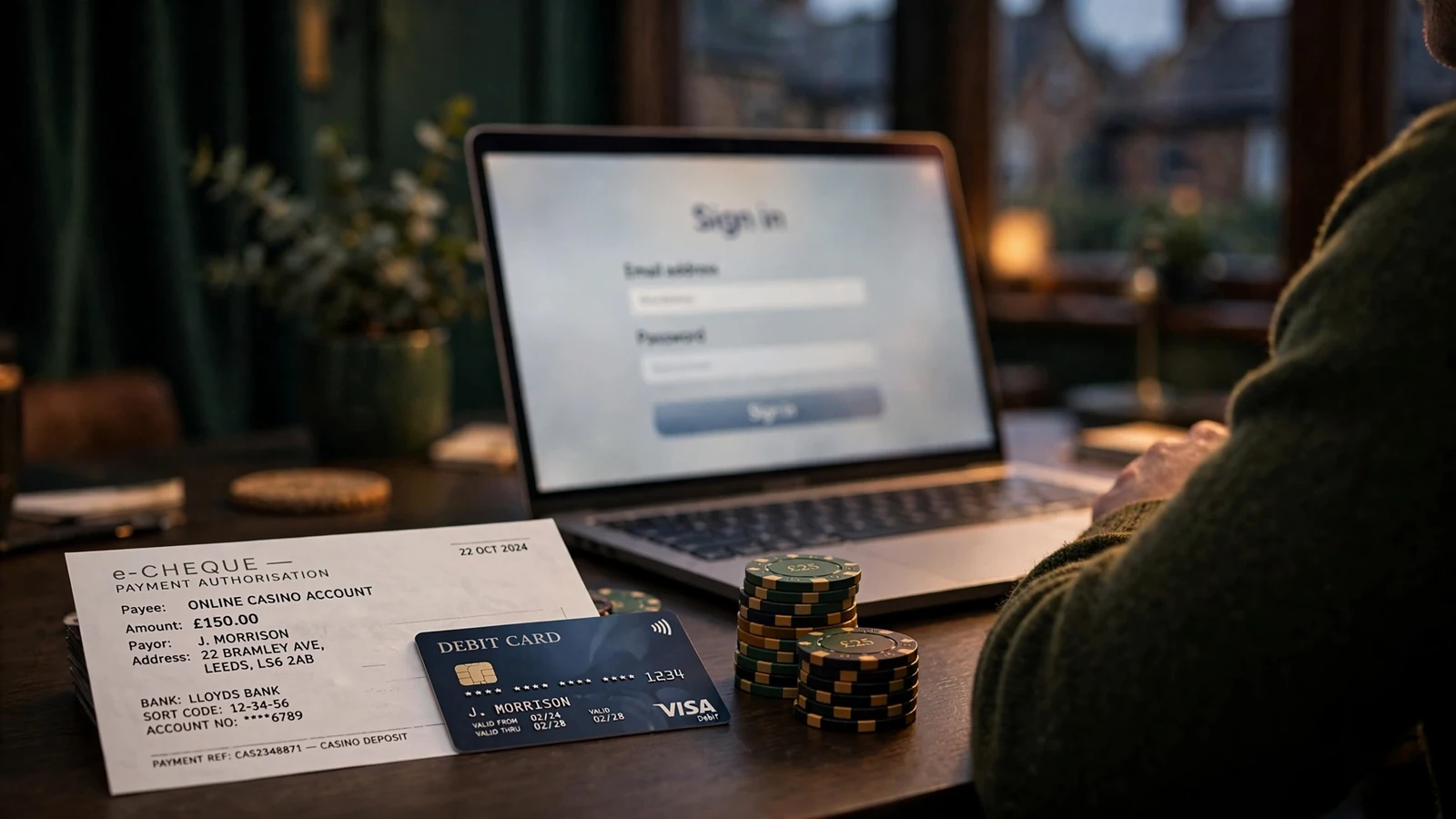
I have learned not to let a familiar label do the thinking for me. “GamStop casino” can sound like a complete assurance; it is only useful if you know exactly what the operator means by it. Check whether the stated exclusion applies to the service you are considering, and whether the operator explains how to contact it if you need help or want to raise a concern. If the wording is vague, treat it as unresolved rather than filling in the gaps yourself.
There is also a useful distinction between self-exclusion and account limits. UKGC requirements mean remote operators must ask new customers to set a financial limit before their first deposit and make account-level limit controls available. That is a separate safeguard from self-exclusion. A limit can help you set boundaries, but it should not be mistaken for a GamStop registration or proof that an exclusion is in place.
If you are looking for a casino with Tether in the UK while using GamStop, pause before opening or funding another account. First check your own exclusion status and the operator’s stated position. Do not treat a different coin, wallet, or payment route as a way around a decision you made to stop. The currency changes; the reason for the exclusion does not.
For a practical check, read the responsible-gambling page and the terms, confirm the UKGC licence on the public register, and look for explicit information about self-exclusion. If those sources do not answer your question, ask the operator before registering. If you are already struggling to stick to a limit or exclusion, prioritise support over finding another site. No payment option makes that decision safer.
UKGC requirements mean remote operators must ask new customers to set a financial limit before their first deposit, which is a separate safeguard from self-exclusion.
Crypto Casinos: Confirm What the Cashier Supports
The word “crypto” on a casino page can sound like a clear payment promise. It isn’t. A specialist review of casino payment pages found mentions of Visa, Mastercard, bank transfers, e-wallets and several cryptocurrencies. That tells you the pages discuss a broad mix of payment types; it does not establish which coins a particular casino accepts, or whether Tether is among them.
I used to treat a general crypto reference as a green light. That was lazy reading on my part. A page can talk about cryptocurrency without naming USDT, and a list of payment methods can be incomplete or out of date. Even when Tether is named in general site copy, the cashier is the place to establish whether the method is available to your account.
Start with the operator’s payment information, then sign in and inspect the cashier before sending anything. Look for Tether or USDT as a selectable option, rather than relying on a banner, an old review, or a sentence saying the casino accepts crypto. If the method is not shown there, pause and ask support to confirm it. Keep the answer and the relevant terms; “we support crypto” is not specific enough to settle whether your intended payment is supported.
It is also worth separating the payment method from the casino’s legal status. A cryptocurrency option does not tell you whether a site is authorised to serve customers in Great Britain. Remote gambling licensees offering real-money gambling to British customers need the relevant UK Gambling Commission licence. Check the operator on the regulator’s public register before opening an account or depositing. A payment badge is not a licence check.

Then read the wording closely. “Crypto accepted” may refer to a category, not every asset or every route within it. The cashier may display different methods depending on the account or the operator’s current arrangements. Don’t infer that support for one cryptocurrency means support for another, and don’t assume that a mention of USDT confirms a particular network. Those are separate details to verify before making a payment.
I’d also avoid treating a third-party review as a live cashier. Reviews can help you identify what to check, but the operator’s own current payment screen and terms are more relevant to the transaction you are about to make. If the information conflicts, don’t guess. Contact the casino and wait for a direct, clear answer.
The sensible takeaway for anyone looking at a Tether crypto casino in the UK is simple: broad crypto wording is a starting point, not proof. Confirm the actual option with the operator, and make sure the site itself is properly licensed. No badge-reading shortcuts.
Comparing Tether Casino Options Without a Made-Up ‘Best’ List
A list of Tether casinos can look useful until you notice that it ranks names without showing what the comparison is based on. I would not call one option “best” just because a page puts it first. For a fair comparison, the details need to match your intended payment and the amount you plan to move.
Start with the total cost, not a headline fee. A specialist review I read identifies several possible charges: a casino fee, a payment-provider fee, a bank or issuer charge, a currency-conversion spread and a network fee. Not every cost will apply to every transaction, and the fee shown most clearly may not be the biggest one. A conversion spread, for instance, can cost more than a visible flat charge. That is easy to miss if you compare only the fee labels.
A direct charge applied by the operator for the transaction.
Charges from the payment-provider used to process the transfer.
The cost associated with the exchange rate used during currency conversion.
The technical cost required to move the asset across the blockchain.
Compare the same amount
A meaningful comparison uses the same intended amount for each option. Check what the cashier says you will pay, what the provider may charge, and what exchange rate or conversion terms apply. Then consider the network cost as part of the total rather than treating it as an unrelated technical detail.
There is no universal cheapest payment method. The result can change with the amount, the casino’s charges, the provider’s fees and the exchange rate used. A method that looks inexpensive for one transaction may not be so attractive for another. I have made the mistake of treating “no fee” as “no cost”. It isn’t the same thing.
Compare what is actually stated
For each option, keep a short note of the relevant terms: whether the cashier supports the payment route you intend to use, which currency the account uses, and what charges are displayed before you confirm. If a page says “free” but does not explain conversion, that is not enough information to make a sound comparison. If the terms are unclear, do not fill in the gaps with assumptions.
The same goes for rankings labelled “best”. Ask what the ranking measures. A low visible charge does not necessarily mean the lowest overall cost, and a broad list does not prove that every entry supports the same Tether route or account currency. A ranking without comparable details is mostly decoration. Not much to go on.

I would compare options in a small table for my own use, with columns for the cashier’s stated support, account currency, visible casino charge, provider charge, conversion terms and network cost. Leave a cell blank if the information is not stated; do not guess. That makes gaps obvious and stops a polished label from doing the thinking for you.
This is not a promise that one casino will come out on top. It is a way to compare the actual terms in front of you, on the transaction you intend to make. The cheapest-looking choice may not be cheapest once every cost is counted. Check the full picture first.
TRC20 Tether: Verify the Network Before Sending
Seeing USDT in a casino cashier does not tell you which network it supports. TRC20 and ERC20 are different network options for Tether, not interchangeable labels. Before sending anything, check that the cashier names the network you intend to use and that your wallet is set to that same network.
I used to focus on the coin name and skim past the smaller details. That is the wrong order. For a Tether TRC20 casino deposit, the cashier needs to show USDT on TRC20 specifically; your wallet’s withdrawal screen must also be set to TRC20. If one side says ERC20 and the other says TRC20, stop. Don’t assume the casino will detect the mismatch or sort it out for you.
The reverse applies if you are looking for an ERC20 Tether casino: confirm that ERC20 is explicitly available in the cashier and selected in your wallet. A general “Tether accepted” badge is not enough to establish network support. Nor does a casino’s use of the word “crypto” tell you which route its payment screen offers.
Network Mismatch
Sending Tether to an address on the wrong network (e.g., sending ERC20 to a TRC20 address) can lead to a permanent loss of funds.
Before sending, read the cashier’s instructions from start to finish. Check the currency, network and destination details shown there, then compare them with the sending screen in your wallet. If the cashier does not identify a network clearly, or the options do not match, pause and ask the operator for clarification rather than guessing. A small detail matters here.
For UK players, this check is separate from checking whether the site is permitted to serve the market. Remote gambling licensees serving Great Britain need the relevant UK Gambling Commission licence, and you can verify the licence number on the Commission’s public register before depositing. A matching network label does not tell you anything about licensing.
I would not treat a search result calling something a “TRC20 Tether casino UK” as proof that its current cashier accepts that route. Payment options can change, and the cashier is where you need to confirm the actual network before acting. If the option is absent, unclear or different from the one in your wallet, don’t send.
No guesswork.
Tether Deposits, Bonuses and Payment Conditions
A Tether deposit and a casino promotion are two separate checks. Seeing a welcome offer on a page does not tell you whether a deposit in USDT qualifies, and seeing Tether in the cashier does not confirm that a bonus is available for that payment route. I’ve learned not to treat the word “welcome” as a promise; the conditions do the real talking.

Before accepting a Tether casino bonus, open the full promotion terms and look for any rules about eligible payment methods, deposits and withdrawals. Check whether the offer applies to your account and whether opting in is required. If the terms do not clearly say that USDT deposits qualify, ask customer support before depositing. A confident-sounding banner is not an answer.
The same applies to a no-deposit offer. Its name alone does not establish who can claim it or what conditions attach to it. Read the rules that come with the offer rather than assuming that being a new customer, or using Tether, is enough. If the terms leave you guessing, pause. That is cheaper than finding out after you have paid.
Deposit minimums also depend on the payment method. One specialist review puts common starting minimums in the £10–£20 range, but that is not a fixed rule for every casino or every cashier. Check the amount displayed for the selected route before you confirm a transaction; a threshold shown for a bank card may not apply to a crypto deposit. The cashier is the useful detail. A broad claim is not.
Bonus eligibility can differ by payment method, too. A specialist review notes that PayPal may be left out of some promotions, despite its appeal for speed and convenience. Treat that as a reason to inspect the terms, not as a rule you can transfer to Tether. Each offer and payment route needs its own confirmation.
Tether Bonus Check
- Open the full promotion terms and conditions
- Verify that USDT deposits are explicitly listed as eligible
- Check if a specific opt-in is required for the offer
- Confirm the minimum deposit amount for the Tether route
- Set your account financial limits before the first deposit
I also check the account’s financial-limit settings before depositing. UK rules require remote gambling licensees to prompt new customers to set a financial limit before their first deposit and to make account-level controls accessible. That setting is separate from a bonus condition, but it belongs in the same pause-before-paying routine: understand the promotion, confirm the minimum shown for Tether, and set a limit you are comfortable with.
No banner is worth guessing over. Check the wording first.
KYC Checks, Payouts and Avoidable Delays
A “no KYC” promise sounds like a shortcut, but I wouldn’t treat it as a promise that a UK-facing casino will never ask who you are. Remote gambling operators must verify a customer’s age before allowing a deposit. Checks may also come into play when a withdrawal is requested, so a claim about skipping verification is not a reliable guide to what will happen later.
A specialist review notes that a first withdrawal can take longer while verification is completed, and that payout speed depends partly on the casino’s internal approval process and whether the account is fully verified. That’s the bit I used to overlook: submitting a withdrawal request is not the same as the casino having approved it. There can be a review in between. Not instant, then.
To reduce avoidable friction, keep the account information and payment route in your own name, and make sure the details you provide are consistent. If the casino cannot match basic ownership details, it may need to resolve that before processing the transaction. Using your own account and route will not guarantee a particular processing time, but it removes a straightforward reason for questions.
Before depositing, read the operator’s terms for its verification requirements and check what it says about withdrawals. If you see “no KYC” in an advert, look for the actual conditions rather than assuming the phrase overrides the operator’s checks. I’ve learned not to confuse less paperwork at sign-up with no checks at all.

If a payout is taking longer than expected, check the account for a verification request and contact the casino through its stated support channel. Keep your details accurate and respond to requests through the operator’s official process. A delay can involve the casino’s approval stage as well as verification; it doesn’t, by itself, tell you which part is holding things up.
BEP20 Tether: Check Network Support Before Paying
Seeing Tether in a cashier is not enough to establish that a BEP20 transfer will work. The payment method and the network are separate checks: a casino might display USDT without making every network available. I would look for an explicit BEP20 or BNB Smart Chain option beside Tether before sending anything.
Read the cashier’s instructions from the deposit screen itself, not an old review or a wallet address copied from somewhere else. Check that the selected asset is USDT and that the network named by the casino matches the network selected in your wallet. If the cashier gives you a choice of networks, treat each option as specific; don’t assume a BEP20 address can accept a transfer sent over TRC20.
That distinction matters because the TRC20 label refers to a different network. A Tether deposit supported through TRC20 does not, by itself, confirm support for BEP20. The same caution applies in reverse. Similar labels, the same stablecoin name, and a familiar-looking address are not proof that the route is compatible.
Before confirming a transaction, check the displayed amount, any stated network cost, and whether the casino’s instructions identify BEP20 for that deposit. If the network is absent, unclear, or inconsistent between the cashier and your wallet, stop and ask the operator for clarification. Don’t send a small “test” payment unless the operator’s terms and instructions explicitly make clear how it will be handled; even a small transfer can become a costly mistake.
I’d also check that the casino holds a current UK Gambling Commission licence before depositing. That is a separate question from network support: a BEP20 option does not establish that a site is licensed to serve UK players. Verify the licence on the Commission’s public register.
No guesswork. Verify first.
Why can a fast payout casino still delay my withdrawal?
A fast payment method does not bypass the casino’s approval process. Your first withdrawal may take longer while your account is verified.
What is the fastest withdrawal method for UK casinos?
PayPal, open banking services and debit cards linked to fast payout systems are generally among the quickest options. The casino’s approval process and your verification status also affect how quickly you receive the money.
Why must withdrawals return to the deposit method?
Returning funds to the original payment source is a common anti-fraud and anti-money-laundering control. Using another route may require extra verification.
Can I deposit in GBP?
Yes, GBP is supported, but check that your account is actually set to pounds before depositing. If it uses another currency, conversion may apply.
What is the current minimum deposit?
The minimum deposit usually starts at £10–£20, depending on the payment method.
Which payment methods are accepted in Great Britain?
UK casino options commonly include Visa and Mastercard debit cards, PayPal, open banking, bank transfers and e-wallets such as Skrill or Neteller. Some sites also offer Paysafecard, Apple Pay, Jeton or cryptocurrencies; check the cashier to see what is available for your account.
Are Visa and Mastercard deposits definitely debit cards?
No. The card network alone does not confirm which card products a casino accepts, so check the cashier for your specific card. Credit cards cannot be used for UK gambling.
Published by the Candyland Casino 4 team.