Is CandyLand Casino Legit for UK Players?
 Available in GB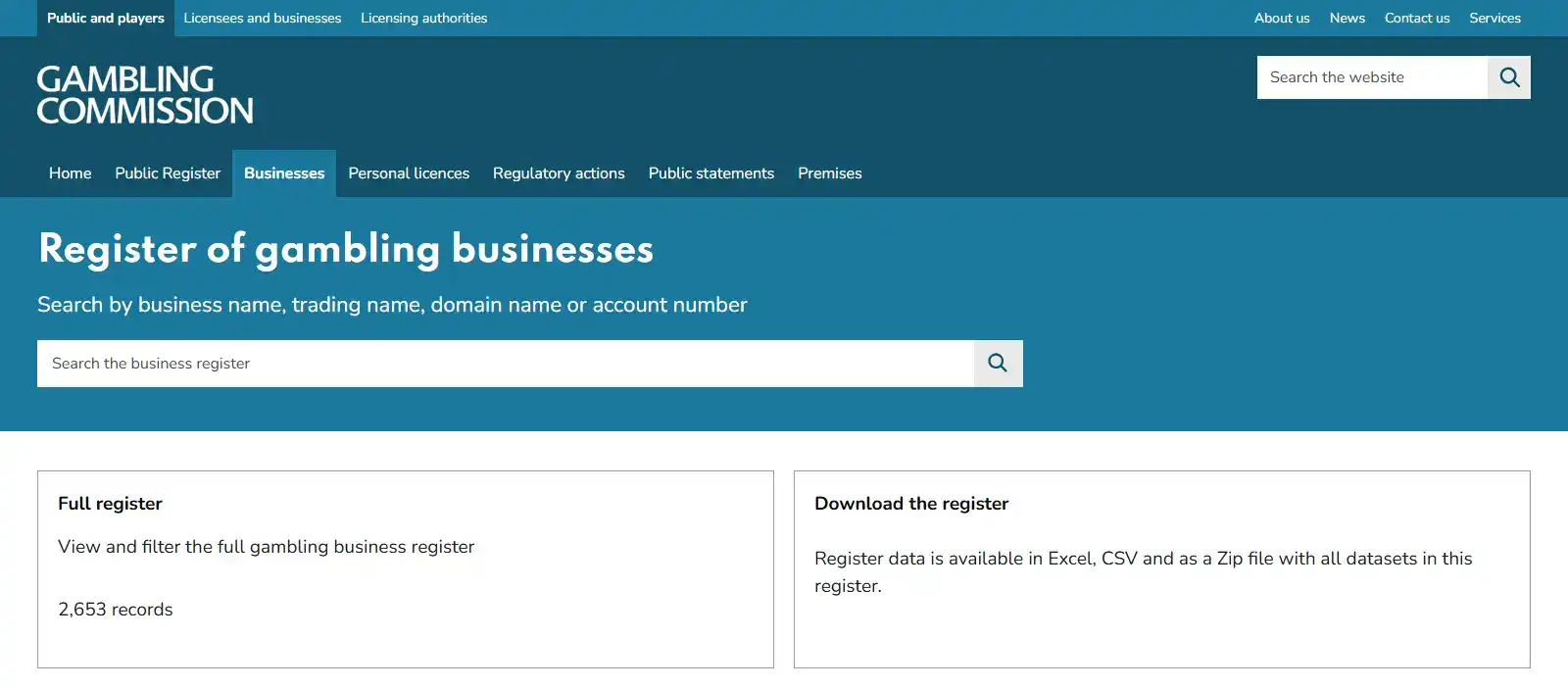
No CandyLand licence appeared in the UK Gambling Commission business register on 21 August 2026. That point matters for readers in Great Britain because the Gambling Commission says a remote casino needs its licence when it provides online gambling facilities to consumers in Great Britain. CandyLand’s current Terms, however, also contain UK-specific GBP and withdrawal provisions, and the United Kingdom is not named in the visible general restricted-country clause. Those are operational-access facts, not proof of UK regulatory authorisation.
The useful conclusion is therefore more precise than a simple “legit” label. CandyLand’s own Terms contain provisions for UK-resident account use, while the dated UKGC register check showed no CandyLand licence. A current active non-UK licence number and current legal operator identity are not established by the current official material described below. UK readers should treat licence status, operational access, withdrawal conditions and reputation as separate questions rather than allowing one of them to stand in for all the others.
Table of Contents
- The four questions behind “is CandyLand legit?”
- What the UK Gambling Commission check showed
- What UKGC rules mean in Great Britain
- Northern Ireland has a separate framework
- Operational UK provisions in CandyLand’s own Terms
- Current licence and operator identity: what remains unclear
- Safer-gambling tools described by CandyLand
- What reputation evidence can and cannot tell you
- A practical trust checklist before depositing
- Decision guide for a Great Britain reader
- Official and regulatory references
The four questions behind “is CandyLand legit?”
Casino trust decisions become clearer when the broad word “legit” is broken into testable questions. First, do the brand’s own Terms contain provisions for UK-resident accounts? Second, is there a licence from the regulator that governs remote casino services to consumers in Great Britain? Third, is a current non-local licence and legal operator identified in authoritative current records? Fourth, what do the casino’s own terms and current reputation signals say about the practical experience of using the account?
For CandyLand, those questions do not all produce the same answer. The official Terms contain provisions written specifically for UK residents, including GBP account wording and a UK-specific withdrawal route. That supports operational acceptance. The UKGC register check produced no CandyLand licence entry. A current non-local licence number and operator identity were not established by authoritative current records as of 21 August 2026. Complaint and review platforms contain both positive and negative signals, but they describe reputation rather than regulatory authorisation.
CandyLand Casino was established in 2022. The brand history is useful context, but age alone does not answer the trust questions above: a launch date does not substitute for a current register check, current Terms or current complaint data.
This separation prevents two common mistakes. A casino can have country-specific account terms without holding that country’s local licence. Equally, a missing local licence does not automatically prove that every public claim about games, bonuses, payments or support is false. Each question needs its own supporting record rather than being inferred from another part of the casino offering.
What the UK Gambling Commission check showed
On 21 August 2026, the Gambling Commission public business register stated that its business data had been updated that day. Searches for CandyLand, candyland.casino and the previously associated name SSC Entertainment produced no current UKGC result.
That is the central local-licence fact for a Great Britain reader. It should be stated exactly and not softened into an implication that a UKGC licence probably exists somewhere else. It also should not be exaggerated into a claim that CandyLand is “illegal in the UK” because the available regulatory material does not establish a single legal conclusion for every part of the United Kingdom and every possible transaction.
The register check is particularly valuable because it avoids relying on affiliate badges, review-site labels or marketing copy. The regulator’s own register is the appropriate source for a claim about a UKGC licence. A third-party site can be useful for reputation analysis, but it cannot replace a register hit when the question is whether a specific UK operating licence appears in the regulator’s register.
Readers can review the current Gambling Commission business register directly. Because register status can change, the date of the check matters. The 21 August 2026 result is dated and should not be treated as permanent.
What UKGC rules mean in Great Britain
The Gambling Commission states that a business needs a licence from it if it provides facilities for online gambling to consumers in Great Britain, regardless of where the business itself is based. Its remote casino operating licence covers online casino games such as slots, roulette and blackjack.
Great Britain in this regulatory context covers England, Scotland and Wales. The practical trust question is not merely whether a casino website can technically load or whether its Terms mention GBP. For a locally regulated remote casino serving Great Britain, the UKGC licence is the authorisation that connects the operator to the Commission’s licensing conditions and regulatory framework.
The Commission’s licensing objectives include preventing gambling from being associated with crime or disorder, ensuring gambling is conducted fairly and openly, and protecting children and other vulnerable people. Those are objectives of the Great Britain regulatory system. They should not be attributed to CandyLand when no CandyLand UKGC licence was found.
The direct register result carries more decision value than a generic safety score: no CandyLand licence appeared in the UKGC register on 21 August 2026.
Northern Ireland has a separate framework
The United Kingdom should not be treated as one identical gambling-law zone. Northern Ireland has a separate framework based on the Betting, Gaming, Lotteries and Amusements (Northern Ireland) Order 1985, as amended by legislation in 2022. The Department for Communities says the existing framework regulates a wide range of betting, gaming, lotteries and amusement activity, while the proposed second phase of reform was intended to address online gambling and gaming more broadly.
That distinction is important when discussing CandyLand for a UK audience. A UKGC register no-hit directly answers the local-licence question for the Great Britain framework. It does not justify pretending that Northern Ireland’s legal structure is identical. A blanket statement that CandyLand is either “fully legal” or “illegal” across the entire UK would therefore be too broad.
For readers in Northern Ireland, the regulatory context should follow current Northern Ireland law and any later reforms rather than copied from a Great Britain-only conclusion. For that jurisdictional split, consult the current Department for Communities gambling overview.
Operational UK provisions in CandyLand’s own Terms
CandyLand’s current Terms contain two UK-specific operational provisions that should not be ignored. They provide that residents in the United Kingdom may opt for British Pound currency, and they include a withdrawal rule specifically for UK players. The visible general restricted-country clause also does not name the United Kingdom.
Taken together, those provisions support the statement that CandyLand’s current account terms contemplate UK-resident use. They give a firmer indication of operational acceptance than a generic third-party country list because they come from the casino’s own current rules.
They do not create a UKGC licence. A cashier setting, a GBP balance and a country-specific withdrawal rule answer a different question from regulatory authorisation. This is the key distinction: operational acceptance and local licensing can point in different directions at the same time.
The practical consequence is that a UK reader should read the withdrawal rules and KYC verification before depositing, while separately treating the UKGC no-hit as a regulatory consideration. The payment methods covers the difference between deposit channels and the narrower UK withdrawal rail.
Current licence and operator identity: what remains unclear
CandyLand states that it operates under Curaçao jurisdiction, but no current active licence number was established from an authoritative registry as of 21 August 2026. That does not support a claim that CandyLand holds a currently active Curaçao licence with a specific number or expiry date.
The current official CandyLand pages do not identify a legal operator. Some older or third-party material associates the brand with SSC Entertainment N.V., but that name should not be treated as the current operator without authoritative confirmation. An affiliate site’s company field is not enough to resolve that uncertainty.
| Trust question | 21 August 2026 result | How to use it |
|---|---|---|
| UKGC licence | No CandyLand licence appeared in the UKGC register on 21 August 2026 | Relevant to Great Britain regulatory authorisation. |
| UK operational acceptance | Current Terms contain UK-specific GBP and withdrawal clauses | Shows the account rules contemplate UK-resident use; it is not a licence. |
| Current active non-local licence number | Not established by current authoritative records | Do not infer a licence number or expiry date. |
| Current legal operator | Not identified on the current official pages | Do not treat older third-party company names as current without confirmation. |
This table summarises the current record and is not a legal judgment. Uncertain company or licence details are left unresolved rather than replaced with a confident but unsupported statement.
Safer-gambling tools described by CandyLand
CandyLand’s responsible-gaming page describes several account-level tools. It says players can request self-exclusion through support, request deposit limits and take a temporary break of up to six weeks. Those are brand features supported by CandyLand’s own policy and can be stated directly.
They should not be confused with participation in UKGC schemes. The Gambling Commission requires relevant licensed remote operators to maintain self-exclusion procedures and participate in the national multi-operator scheme. Its public guidance identifies GAMSTOP Online as the online multi-operator self-exclusion route. Because the dated UKGC register check showed no CandyLand licence, no claim is made that CandyLand participates in GAMSTOP or that its internal self-exclusion is covered by UKGC supervision.
For a player who wants one-site controls, CandyLand’s own deposit-limit, break and self-exclusion options are still practical account tools. For a reader specifically seeking the protections attached to UKGC-licensed operators, the licence check is a separate requirement and should not be replaced by the presence of a responsible-gaming page.
What reputation evidence can and cannot tell you
Review and complaint platforms can reveal recurring themes, but they cannot establish a gambling licence. A high review score is not regulatory authorisation. A negative review is not proof of an allegation. The correct use of reputation evidence is to identify patterns worth checking against the casino’s own Terms and your own transaction records.
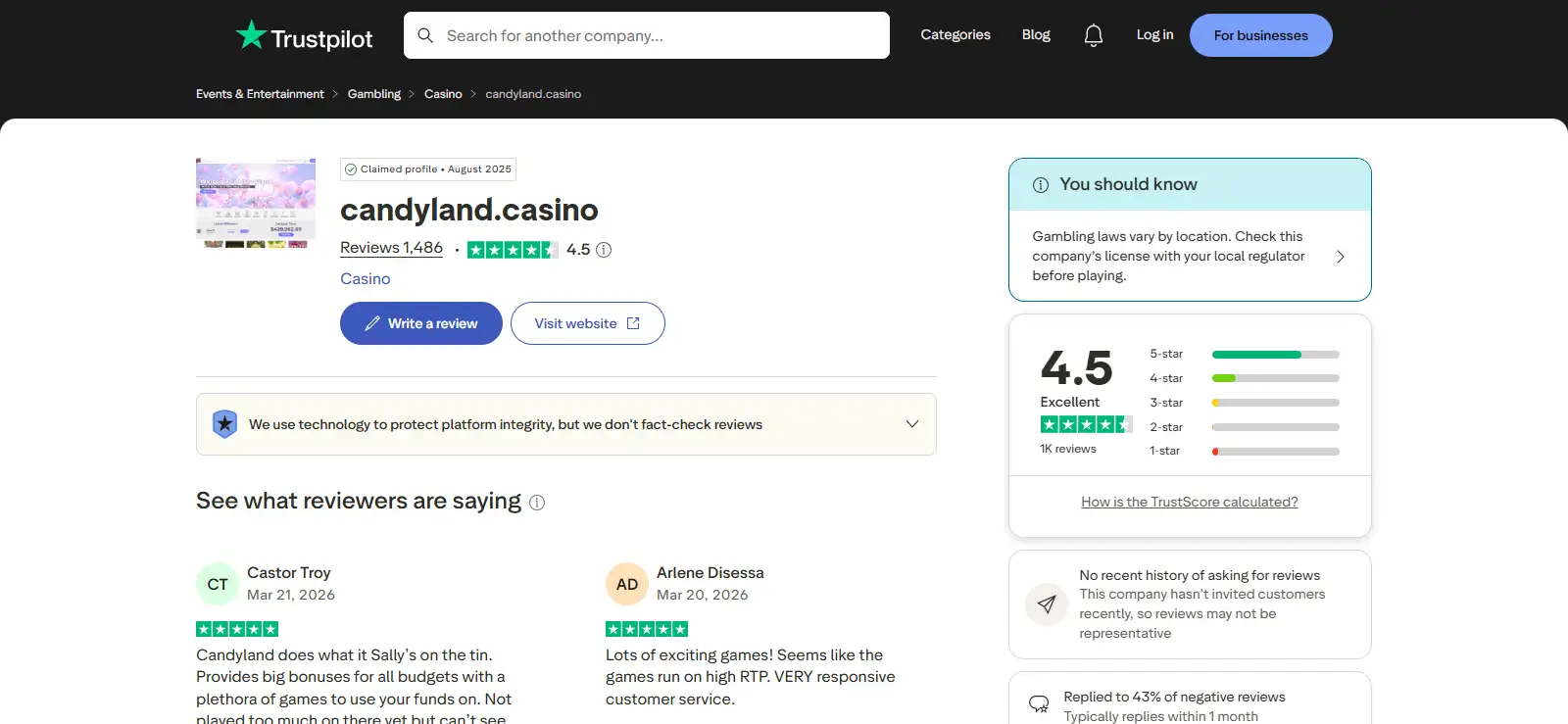
CandyLand complaint listings include withdrawal-related cases, while Trustpilot contains a large volume of user reviews with mixed individual experiences. Those signals are analysed on the dedicated CandyLand complaints page. Reputation should remain separate from the licence question because review platforms cannot establish regulatory authorisation.
When evaluating a cashout complaint, the factual benchmark should be the current withdrawal rules, including verification requirements and the stated processing range. A review can indicate that a person says a payment took longer; it cannot by itself establish why that happened or whether every term was met.
A practical trust checklist before depositing
- Check the local licence yourself. Search the current Gambling Commission register rather than relying on a logo or an affiliate statement.
- Separate access from authorisation. CandyLand has UK-specific Terms, but those clauses are not evidence of a UKGC licence.
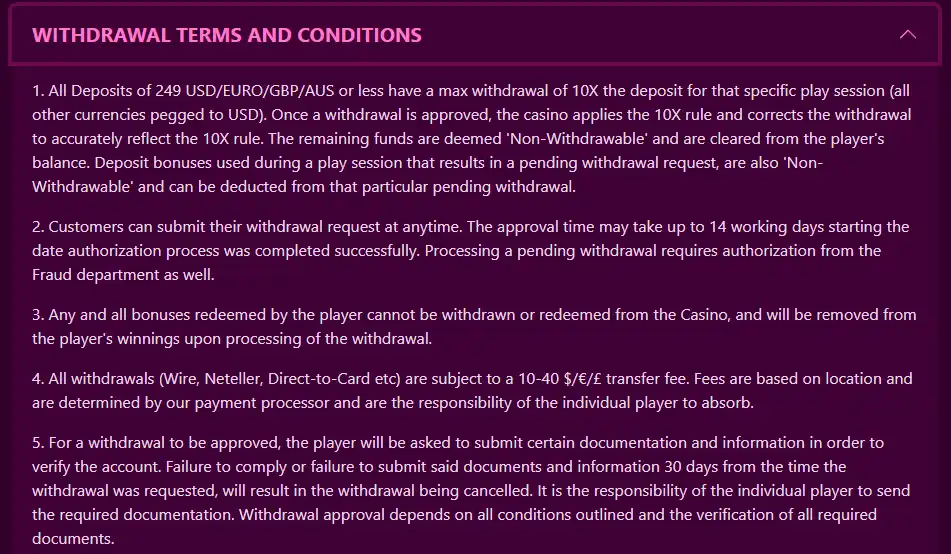
- Read cashout before deposit. The withdrawal framework can matter more than the deposit screen if your goal is to move winnings out later.
- Prepare for KYC. CandyLand requires verification documentation for withdrawals, so identity checks should be part of the decision before money is committed.
- Use safer-gambling controls early. Deposit limits, breaks and self-exclusion are more useful when set before gambling becomes difficult to control.
- Treat review platforms as signals. Look for recurring themes, then compare them with official Terms rather than treating an individual story as proven fact.
- Recheck time-sensitive details. Licence registers, withdrawal terms and operator information can change, so dated records are more reliable than undated summaries.
Decision guide for a Great Britain reader
If UKGC authorisation is a non-negotiable requirement for you, the current register result is decisive for that preference: no CandyLand licence appeared in the UK Gambling Commission register on 21 August 2026. That does not require a dramatic label; it means the local licence relationship expected from a UKGC-regulated remote casino was not present in the dated register result.
If you are evaluating CandyLand despite that regulatory gap, the next most important information is operational rather than promotional. Read the UK withdrawal route, limits and KYC requirements, understand what identity documentation is required, and keep the local licence question separate from the fact that the Terms contemplate UK accounts.
The CandyLand review puts those trust findings alongside bonuses, games, payments, mobile use and registration. The regulatory question is kept narrow so the licence decision can be made without marketing language or an unsupported “safe” verdict.
Official and regulatory references
The Gambling Commission business register provides the dated UKGC status, while the remote casino operating licence guidance explains the Great Britain licensing requirement. Northern Ireland context is covered by the Department for Communities page cited above. CandyLand’s UK account wording comes from the current Terms, and its safer-gambling tools are described on the current responsible-gaming page.
Licence status is time-sensitive information. Because licence status can change, consult the regulator register again before relying on the dated result for a current decision.
Created by the ”Candyland Casino 4” editorial team.